Path 1 — The Initiation of Motion
Path 1 represents the first stirring of consciousness from unity into movement. It marks the transition from pure being into directed force, initiating the descent of spirit into manifestation. This path establishes the principle of motion itself, without form or limitation, serving as the primordial impulse that sets the entire Tree of Life into operation.
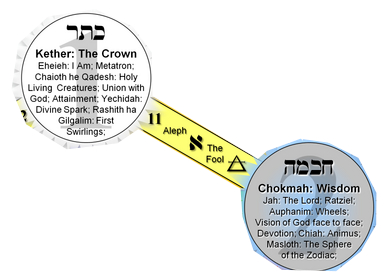
Path 2 — The Reception of Unity into Understanding
Path 2 is the path through which unity becomes intelligible without being fragmented. It receives divine potential and prepares it for formulation, emphasizing receptivity, inner silence, and containment. This path governs intuitive knowing prior to articulation and forms the womb of structured understanding.
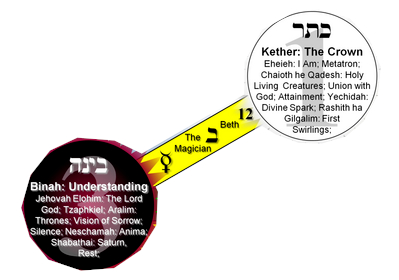
Path 3 — The Descent of Awareness into Identity
Path 3 channels supernal unity directly into the heart of consciousness. It represents the awakening of identity as a reflection of divine source, establishing the possibility of self-awareness without separation. This path governs inner illumination and the silent recognition of being.
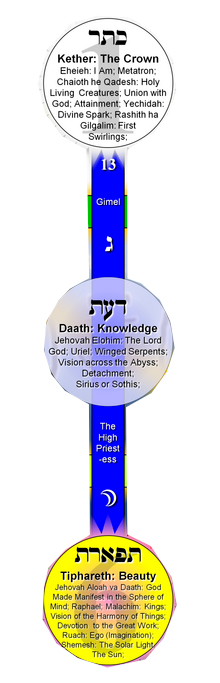
Path 4 — The Birth of Creative Balance
Path 4 unites force and form into harmonious creation. It is the first fully generative path, where wisdom and understanding combine to produce structured life. This path governs fertility, synthesis, and the emergence of balanced manifestation throughout the Tree.
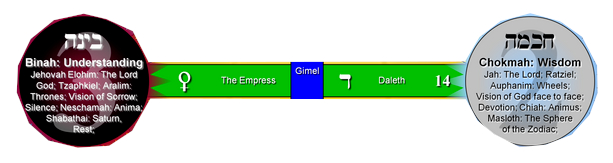
Path 5 — The Establishment of Authority and Order
Path 5 governs the rulership of force through structure and law. It channels expansive wisdom into benevolent authority, ensuring power is exercised responsibly. This path forms the backbone of governance, discipline, and stability within both psyche and cosmos.
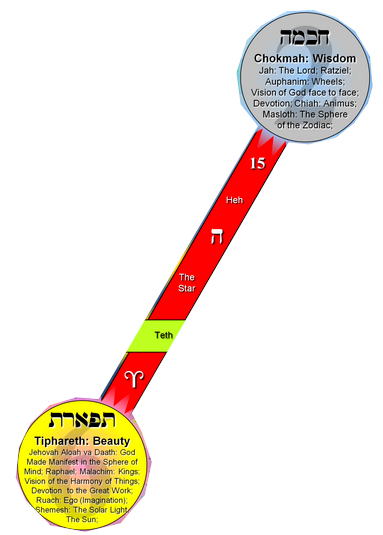
Path 6 — The Transmission of Sacred Tradition
Path 6 stabilizes wisdom by embedding it into lineage, teaching, and ritual continuity. It ensures that insight is preserved rather than dissipated, forming the foundation of initiatory systems and sacred transmission. This path governs doctrine, instruction, and spiritual inheritance.
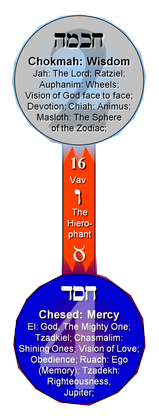
Path 7 — The Ethical Alignment of the Self
Path 7 aligns personal identity with higher law through conscious choice. It governs moral discernment and the integration of understanding into lived integrity. This path marks the point where knowledge becomes ethical responsibility rather than abstract comprehension.
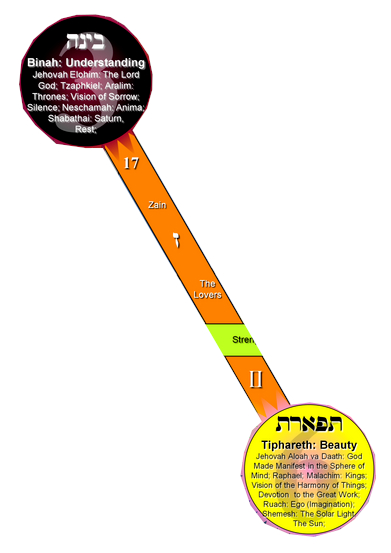
Path 8 — The Enforcement of Structure through Discipline
Path 8 applies strength to maintain order. It governs disciplined containment, controlled will, and the capacity to uphold law under pressure. This path ensures that structure is actively preserved rather than passively assumed.
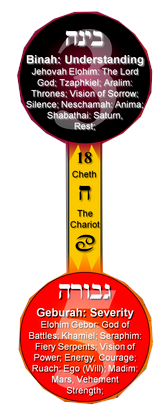
Path 9 — The Balance of Mercy and Severity
Path 9 harmonizes opposing forces through inner mastery. It reconciles strength with compassion, ensuring that authority is exercised with restraint and wisdom. This path governs courage, emotional regulation, and ethical power.
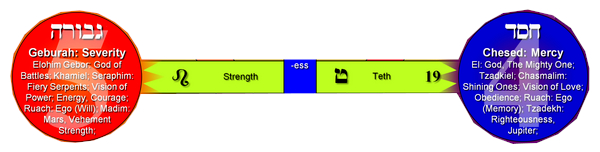
Path 10 — The Internalization of Wisdom
Path 10 draws authority inward, transforming external law into inner guidance. It governs solitude, reflection, and the formation of conscience. This path ensures that wisdom becomes personally embodied rather than externally imposed.
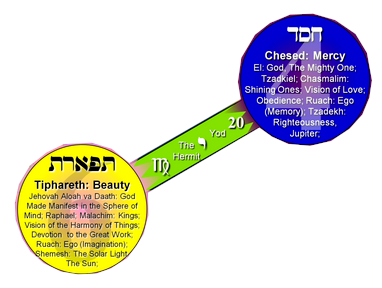
Path 11 — The Lawful Movement of Change
Path 11 governs cyclical transformation. It ensures that change unfolds according to pattern and rhythm rather than chaos. This path teaches adaptability, trust in process, and alignment with lawful motion.
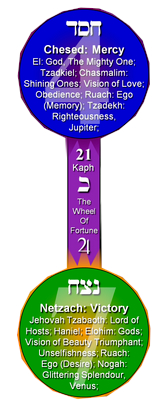
Path 12 — The Calibration of Justice
Path 12 balances corrective force through harmony. It governs ethical equilibrium, self-assessment, and proportional response. This path ensures that discipline serves alignment rather than punishment.
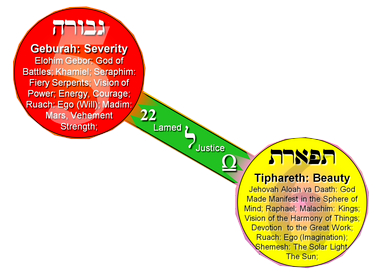
Path 13 — The Transformation of Power through Surrender
Path 13 inverts force into understanding. It governs suspension, reversal of perspective, and cognitive humility. This path transforms severity into insight through conscious surrender.
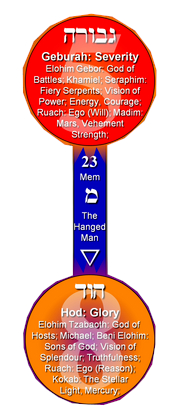
Path 14 — The Purification of Desire
Path 14 completes and refines desire through conscious transformation. It governs release, renewal, and the death of obsolete patterns. This path ensures that desire evolves rather than stagnates.
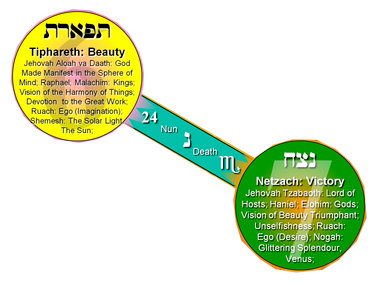
Path 15 — The Harmonization of Consciousness and Subconsciousness
Path 15 integrates solar awareness into the subconscious realm. It governs balance, moderation, and the smooth circulation of force between conscious intention and instinctual processes.
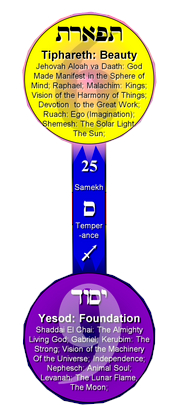
Path 16 — The Revelation of Illusion
Path 16 exposes bondage created by false identification. It governs liberation through awareness, revealing attachments and misconceptions that restrict consciousness. This path breaks illusion without compromise.
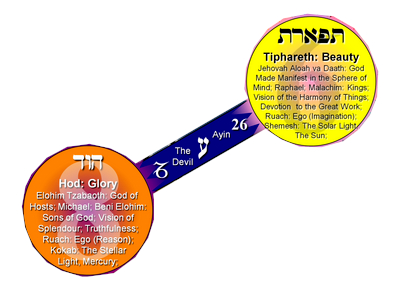
Path 17 — The Collapse of False Structures
Path 17 destroys illusions that can no longer be sustained. It governs sudden revelation, disruption, and the breakdown of unstable systems. This path clears space for authentic rebuilding.
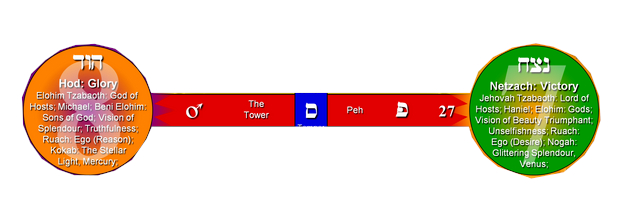
Path 18 — The Healing of the Psyche
Path 18 restores orientation after collapse. It governs hope, renewal, and gentle reintegration of awareness. This path heals fragmentation and reestablishes trust in guidance.
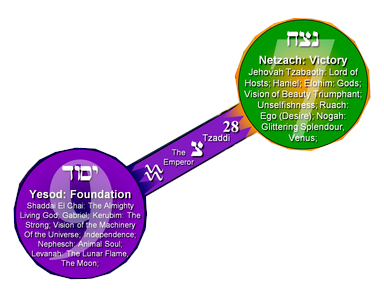
Path 19 — The Projection of Desire into Matter
Path 19 mediates emotional energy into sensory perception. It governs imagination, instinct, and subconscious symbolism. This path reveals how desire shapes experienced reality.
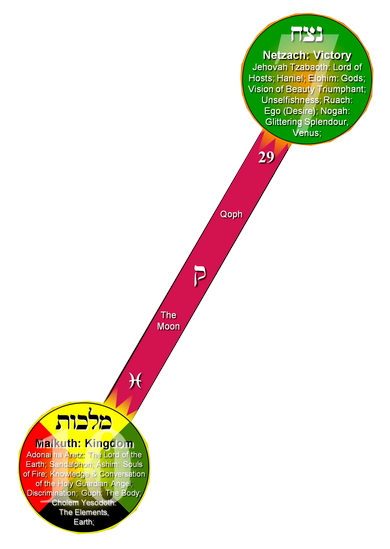
Path 20 — The Illumination of the Subconscious
Path 20 clarifies inner worlds through awareness. It governs insight, integration, and conscious perception of unconscious processes. This path brings light to hidden structures of mind.
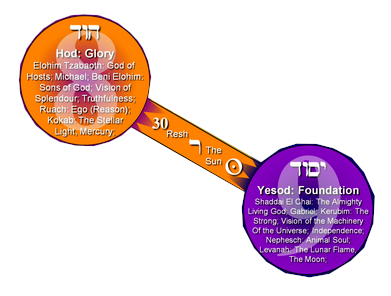
Path 21 — The Awakening of Consciousness in the World
Path 21 resurrects awareness within embodied life. It governs awakening, accountability, and conscious participation in material existence. This path calls the self to full presence.
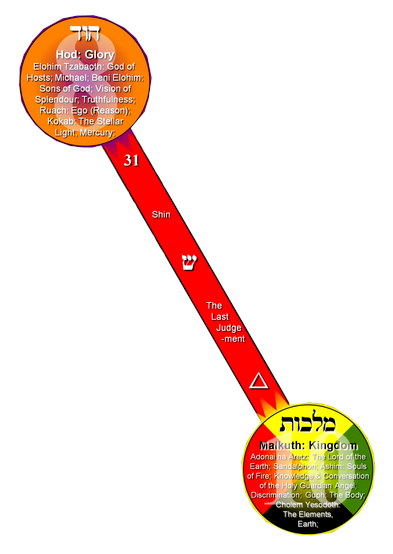
Path 22 — The Completion of the Great Work
Path 22 integrates consciousness fully into matter. It represents completion, wholeness, and balanced embodiment. This path seals the Tree, uniting spirit and form into realized totality.
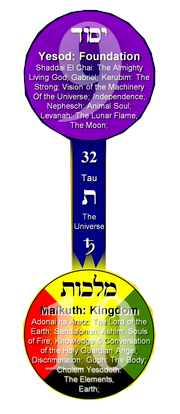
What are the Paths on the Tree of Life?
The Paths on the Tree of Life are the channels of consciousness that connect the ten Sephiroth. In Golden Dawn teaching, they represent dynamic processes of transformation rather than static states, describing how spiritual force moves, changes, and becomes embodied through initiation.
How many Paths are there on the Tree of Life?
There are 22 Paths, corresponding to the 22 Hebrew letters and the 22 Major Arcana of the Tarot. Together, they form a complete symbolic system describing the descent of spirit into matter and the ascent of consciousness back toward unity.
Why are the Paths associated with the Tarot?
In the Hermetic Order of the Golden Dawn, the Major Arcana are not fortune-telling tools but initiatory archetypes. Each Tarot card represents the energy, challenge, and transformation inherent in its corresponding Path on the Tree of Life.
What role do the Paths play in the Great Work?
The Paths describe the actual process of spiritual development. While the Sephiroth represent states of being, the Paths represent movement—how consciousness evolves, integrates lessons, dissolves illusions, and reorients itself toward higher alignment.
Are the Paths psychological or spiritual?
They are both. The Paths operate simultaneously as psychological processes, spiritual initiations, and cosmic principles. This is why the Tree of Life functions as a complete operating system for consciousness rather than a purely mystical diagram.
Why are Hebrew letters assigned to the Paths?
The Hebrew letters encode vibrational, linguistic, and archetypal forces. Each letter expresses a mode of movement, transformation, or connection that precisely matches the energy of its corresponding Path.
Do the Paths have to be worked in order?
Not strictly. While the Tree has a logical structure, initiation is non-linear. Different Paths activate at different stages depending on the aspirant’s development, balance, and readiness.
What is the difference between Sephiroth and Paths?
The Sephiroth are centers of consciousness; stable states or functions. The Paths are processes—the transitions, challenges, and transformations that occur between those states.
Why do so many modern explanations of the Paths feel confusing or contradictory?
Many modern interpretations strip the Paths of their Qabalistic structure, sever their Tarot and Hebrew correspondences, or reduce them to psychological metaphors. In doing so, they lose coherence. Golden Dawn doctrine preserves the system as an integrated whole.
Are the Paths meant to be experienced symbolically or practically?
Both. The Paths are studied symbolically, meditated upon imaginatively, and encountered practically through life experience, ritual, ethical testing, and psychological integration.
Why is studying the Paths essential for serious Golden Dawn work?
Without the Paths, the Tree of Life becomes static. The Paths explain how change occurs, how imbalance is corrected, and how consciousness evolves. They are the blueprint of initiation itself.
Can the Paths be dangerous to work with?
When approached without discipline or grounding, Path work can lead to confusion or imbalance. This is why the Golden Dawn emphasizes structure, preparation, and ethical alignment rather than uncontrolled experimentation.
How do the Paths relate to magic and ritual?
Each Path governs specific symbolic currents that inform ritual design, visualization, talismanic work, and inner alchemy. Understanding the Paths allows ritual to function as alignment rather than theatrical display.
What is the ultimate goal of Path work?
The ultimate goal is integration; the conscious embodiment of spiritual intelligence within material existence. The Paths guide the aspirant from fragmentation to coherence, from illusion to clarity, and from unconscious reaction to awakened participation in the Great Work.
Why study the Paths as a complete system rather than individually?
Because the Paths form a living network. Each Path gains meaning through its relationship to the others. Studied together, they reveal a complete map of transformation rather than isolated symbols.