Information and Resources
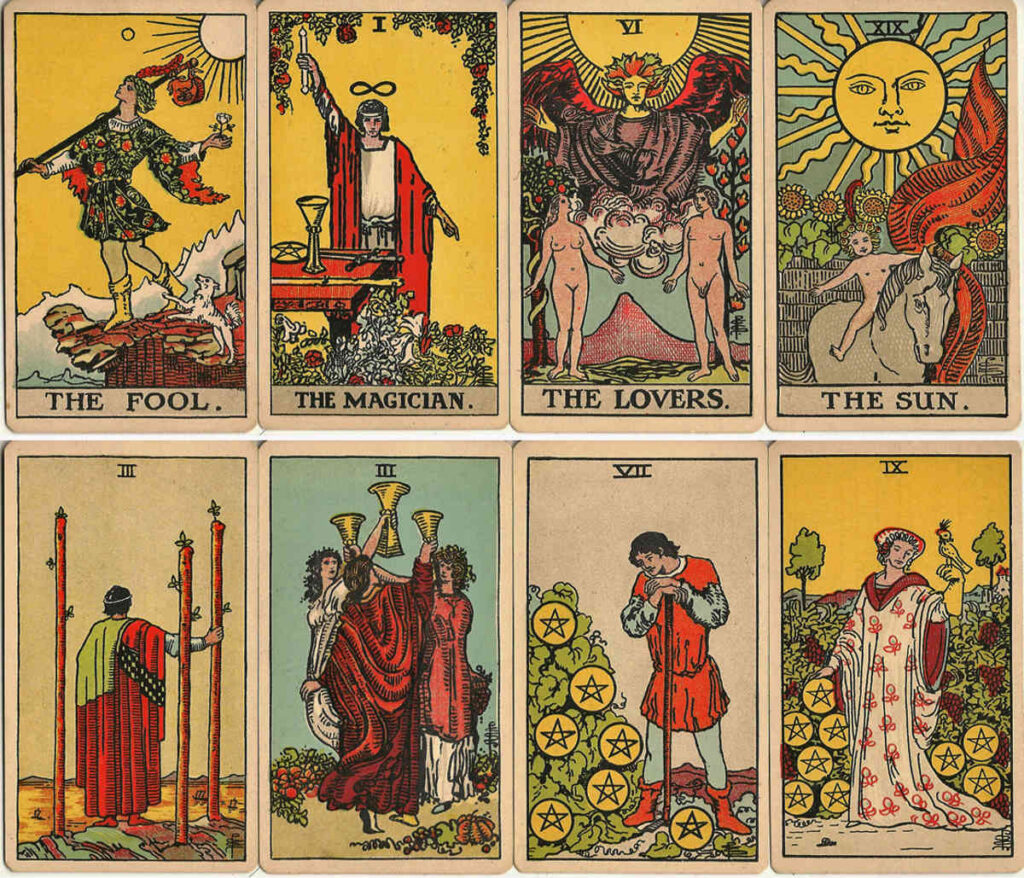
This blog explores the Tarot as a complete symbolic system within Western esotericism. Each post offers a detailed, card-by-card examination of symbolism, correspondences, and practical interpretation, drawing from Golden Dawn teachings to present the Tarot as a structured path of study and self-development rather than a collection of isolated meanings.
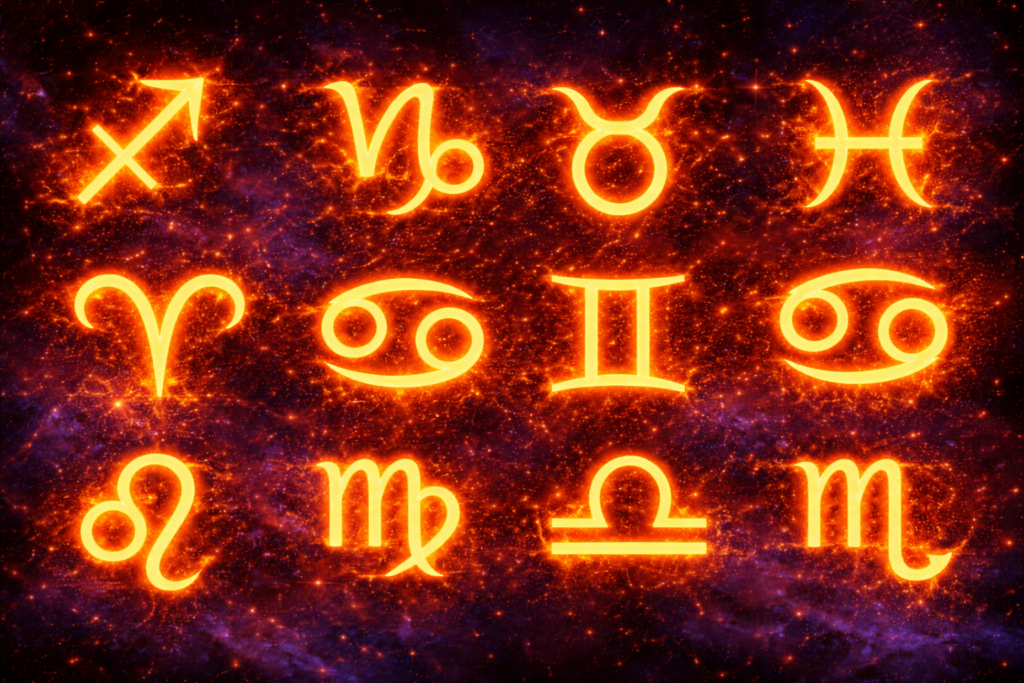
This section explores the Zodiac as understood within the Hermetic Order of the Golden Dawn, presenting each sign as a living esoteric force rather than a modern personality label. Through a Western esoteric lens, the Zodiac is examined as a symbolic map of initiation, spiritual development, and cosmic intelligence, revealing how zodiacal energies interact with the Tree of Life, planetary forces, and the unfolding of the Great Work. Each post offers a deeper study of an individual sign, guiding the reader toward greater self-knowledge and alignment with universal law.
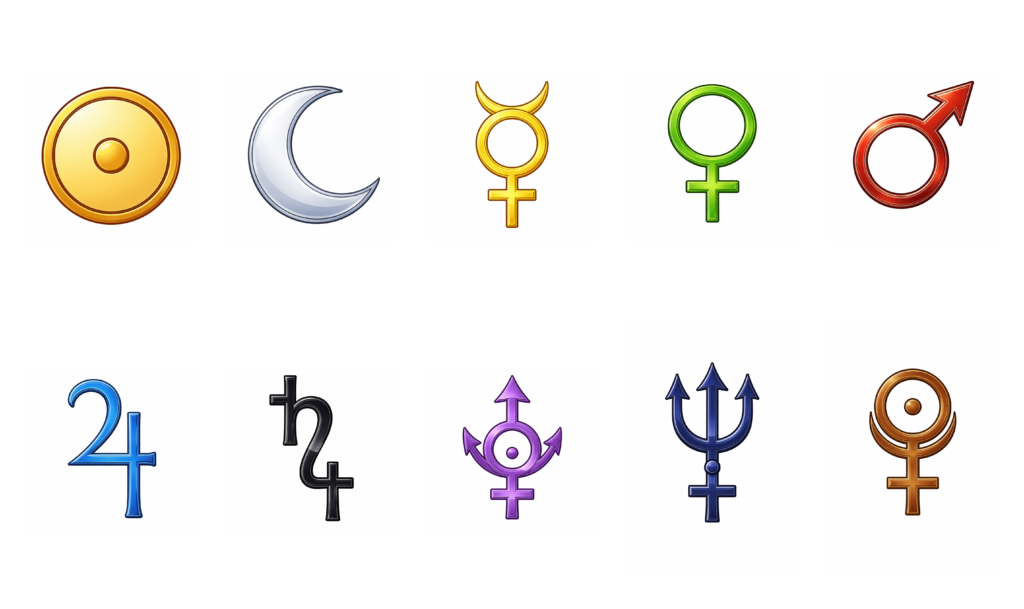
This section explores the Planets as understood within the Hermetic Order of the Golden Dawn, presenting each planet as a living esoteric force rather than a purely astronomical body or psychological archetype. Through a Western esoteric lens, the planets are examined as active intelligences and formative powers, shaping consciousness, initiation, and spiritual development throughout the Great Work. Each planetary force is explored in relation to its symbolic function, elemental nature, and role within Hermetic cosmology, offering deeper insight into how planetary energies influence the soul’s evolution and alignment with universal law.
This section explores the Elements as understood within the Hermetic Order of the Golden Dawn, presenting Air, Fire, Water, Earth, and Spirit as living esoteric principles rather than abstract qualities or physical substances. Through a Western esoteric lens, the Elements are examined as fundamental forces of manifestation and initiation, shaping consciousness, magical practice, and the unfolding of the Great Work. Each elemental power is explored in relation to its symbolic form, spiritual function, and role within Hermetic cosmology, offering insight into how elemental balance governs the soul’s development and alignment with universal law.
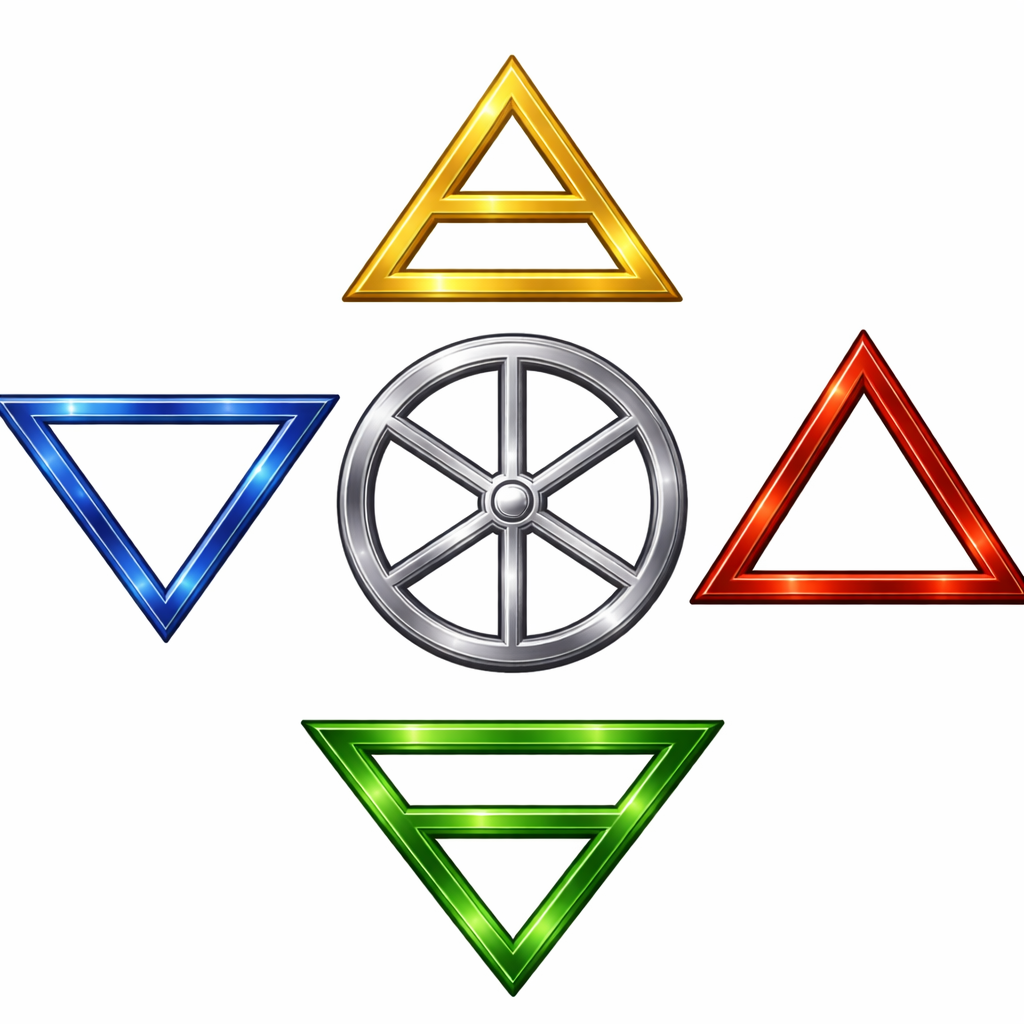
This section explores the Rituals of the Hermetic Order of the Golden Dawn as precise initiatory operations rather than symbolic performances or ceremonial pageantry. Through a Western esoteric lens, Golden Dawn rituals are examined as structured methods for aligning consciousness with elemental, planetary, and Qabalistic forces, embedding doctrine directly into action and perception. Each ritual functions as a deliberate mechanism of transformation, training the aspirant’s awareness, will, and subtle senses in accordance with the Tree of Life and the demands of the Great Work. In this section, Golden Dawn rituals are presented in their proper context—as living processes that integrate symbolism, discipline, and spiritual law into a coherent initiatory practice.
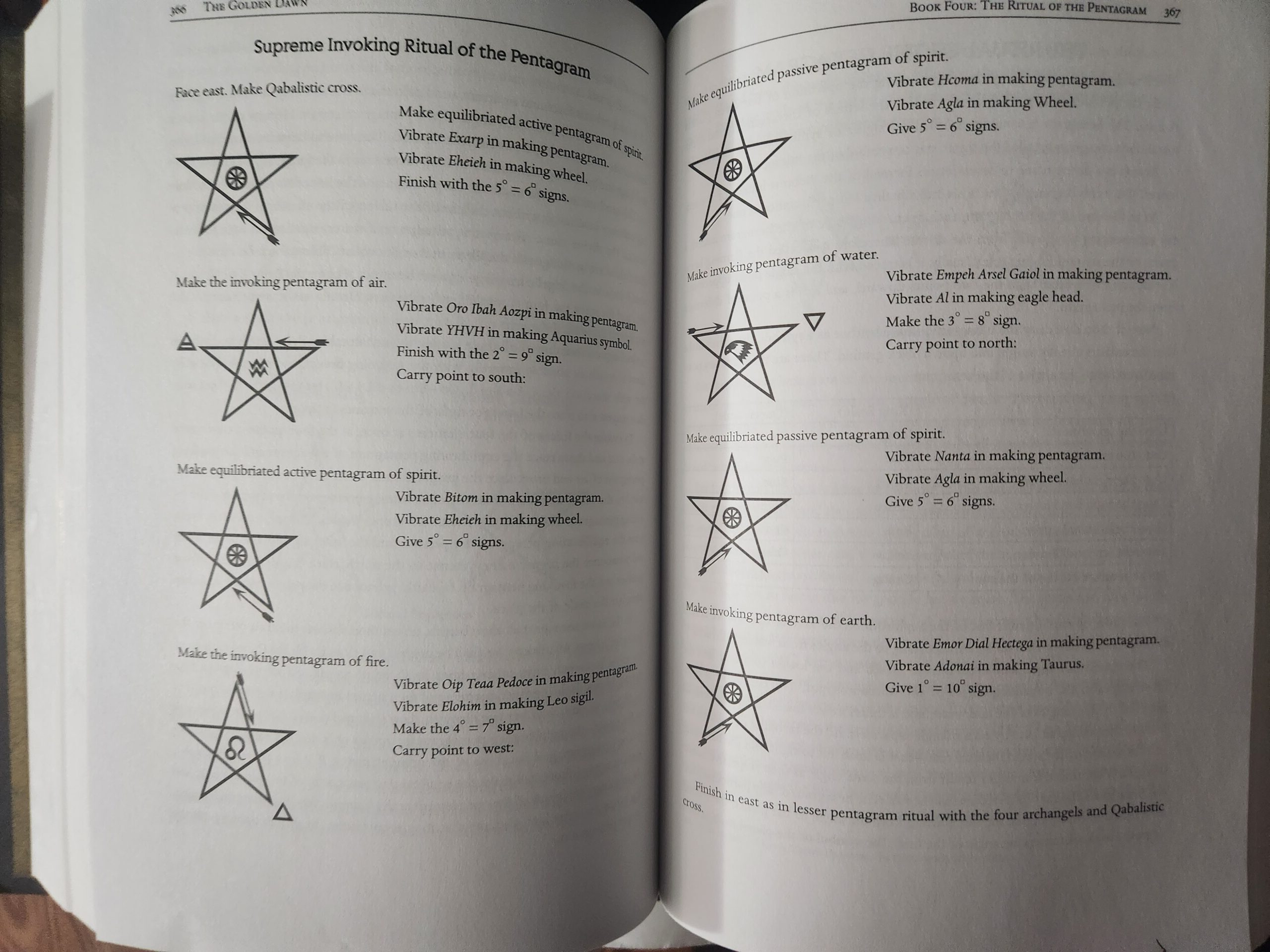
This section explores the Hebrew alphabet as a living symbolic system central to Hermetic Qabalah and the Golden Dawn tradition, rather than merely a phonetic or linguistic construct. Each Hebrew letter is examined in relation to its esoteric meaning, Qabalistic function, and correspondence on the Tree of Life, where the letters serve as the connective pathways between the Sephiroth. Through these correspondences, the alphabet is revealed as a map of consciousness, encoding principles of creation, transformation, and spiritual transmission. This section is intended to provide both a practical and contemplative framework for understanding how the Hebrew letters operate within ritual, magical tools, pathworking, and initiatory development, forming a critical foundation for deeper work within the Western esoteric tradition.
Blog Posts
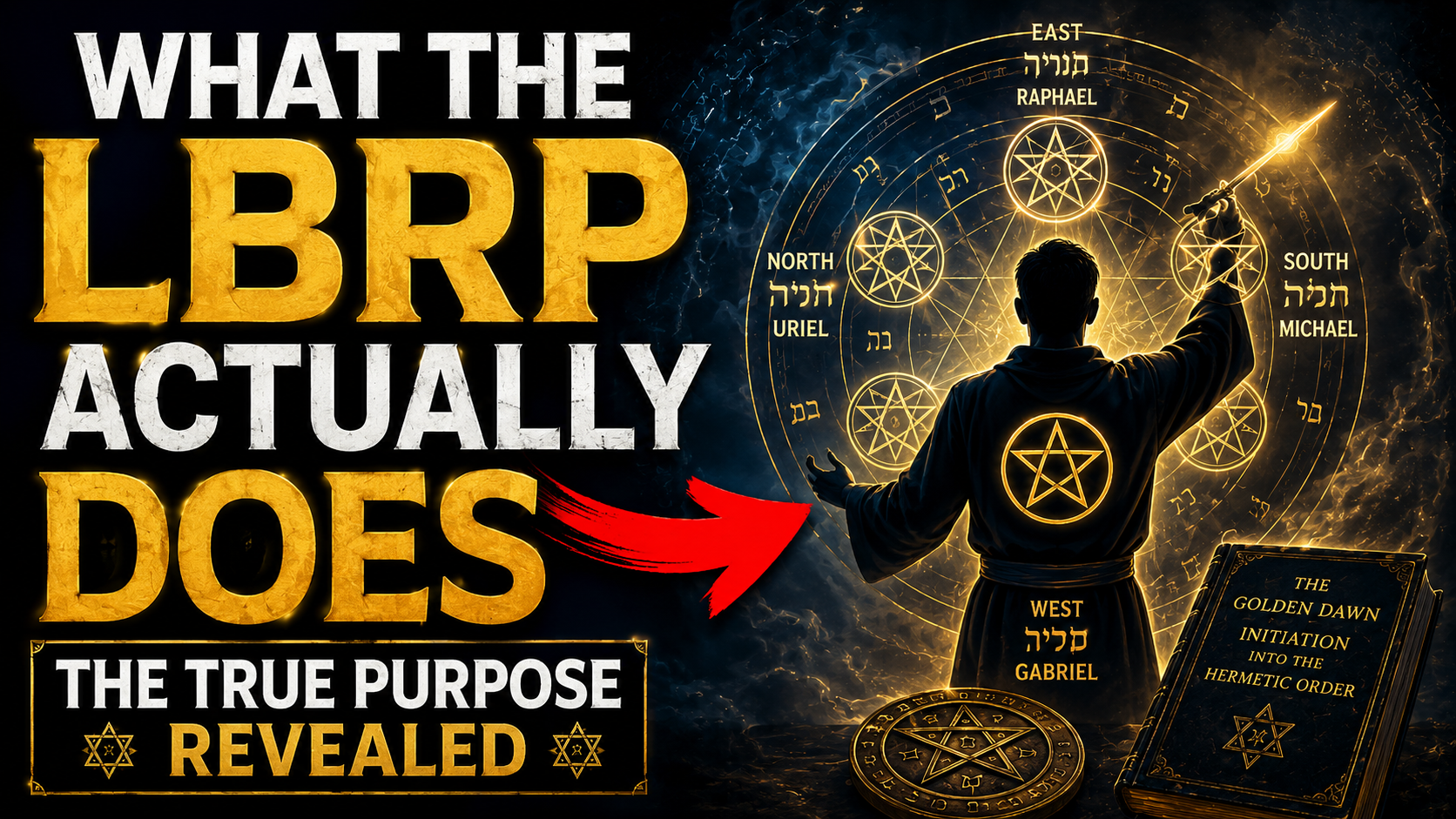
This article explores the Lesser Banishing Ritual of the Pentagram as one of the foundational practices of the Golden Dawn tradition, moving beyond the common idea that the LBRP is merely a protection ritual or method of clearing negative energy. The ritual is examined as a complete act of orientation, alignment, and symbolic training, using the Qabalistic Cross, pentagrams, divine names, elemental directions, and archangelic invocation to organize consciousness within a balanced ritual space. Through this structure, the LBRP is revealed as a practice of inner order, elemental equilibrium, and spiritual centering, providing the practitioner with a stable foundation for deeper work in Hermetic Qabalah, ceremonial magic, and the broader Golden Dawn system.
This article explores the Middle Pillar Ritual as a central practice within the Golden Dawn tradition, examining its role as a method of inner alignment, spiritual integration, and Qabalistic embodiment. Rather than treating the ritual as a simple visualization or energy exercise, the Middle Pillar is presented as a living expression of the central column of the Tree of Life, linking Kether, Tiphareth, Yesod, and Malkuth within the practitioner’s own field of consciousness. Through the use of divine names, spheres of light, breath, vibration, and the circulation of force, the ritual becomes a practical means of organizing the self around a stable spiritual axis. This article provides a contemplative and practical framework for understanding how the Middle Pillar complements the LBRP and prepares the practitioner for deeper work in Hermetic Qabalah, ceremonial magic, and the Golden Dawn system.
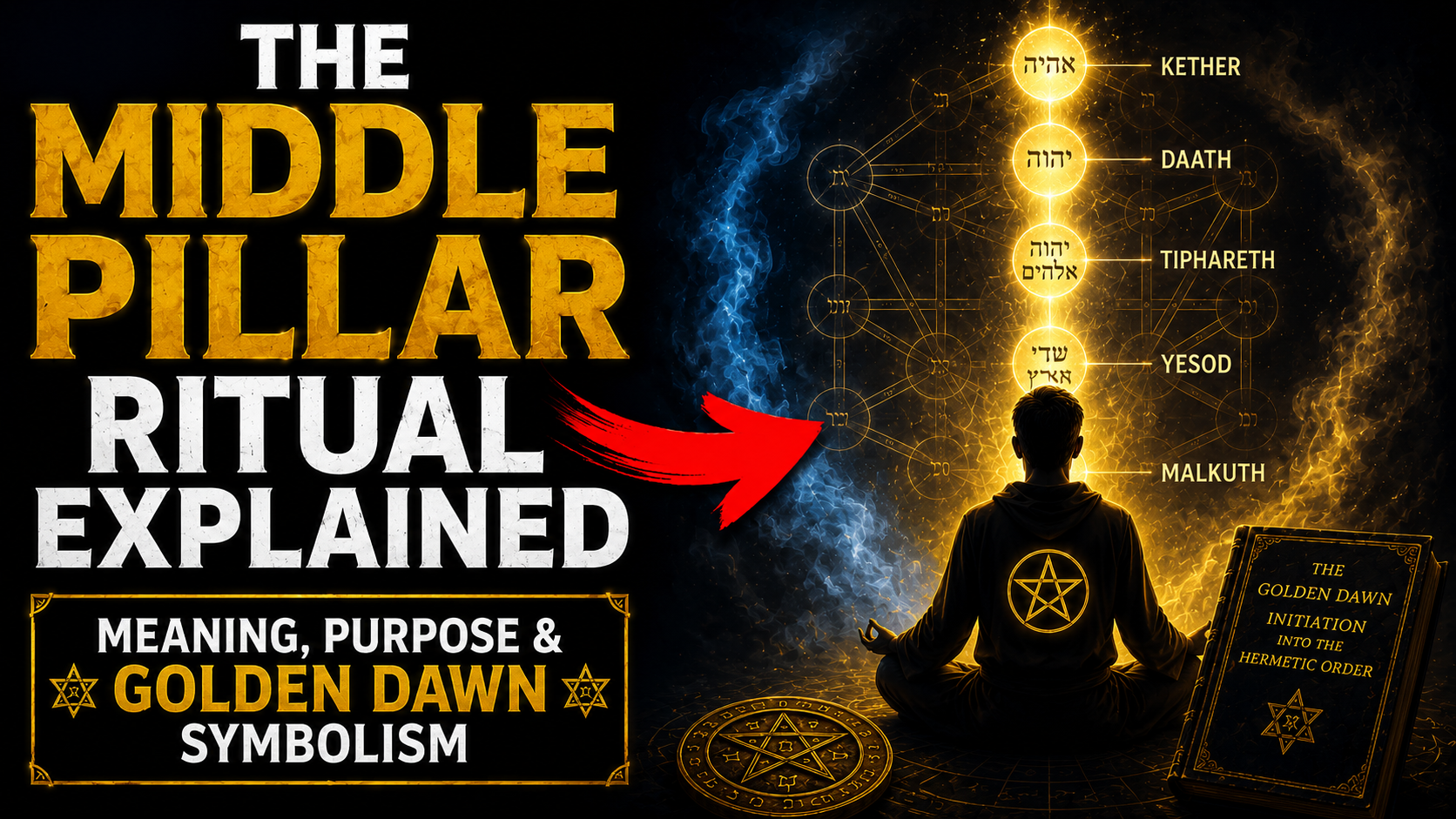
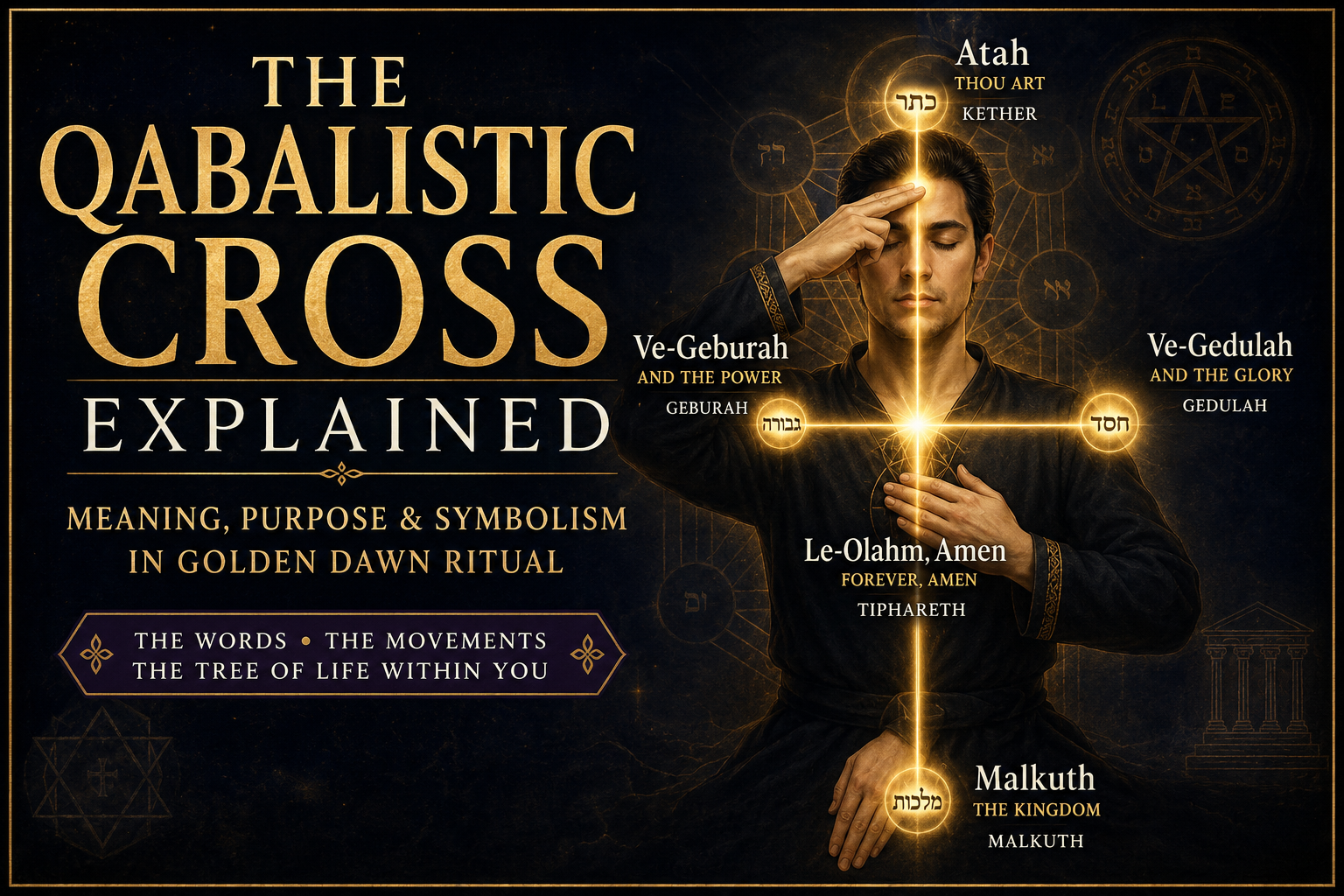
This article explores the Qabalistic Cross as one of the foundational rituals of the Golden Dawn tradition, examining its function as a practice of centering, spiritual orientation, and symbolic alignment. Through the words Atah, Malkuth, Ve-Geburah, Ve-Gedulah, and Le-Olahm, Amen, the practitioner establishes a living cross upon the body and aligns themselves with the structure of the Tree of Life. The ritual is presented as more than a preliminary gesture, revealing how its vertical axis connects divine source with physical This article explores the Middle Pillar Ritual as a central practice within the Golden Dawn tradition, examining its role as a method of inner alignment, spiritual integration, and Qabalistic embodiment. Rather than treating the ritual as a simple visualization or energy exercise, the Middle Pillar is presented as a living expression of the central column of the Tree of Life, linking Kether, Tiphareth, Yesod, and Malkuth within the practitioner’s own field of consciousness. Through the use of divine names, spheres of light, breath, vibration, and the circulation of force, the ritual becomes a practical means of organizing the self around a stable spiritual axis. This article provides a contemplative and practical framework for understanding how the Middle Pillar complements the LBRP and prepares the practitioner for deeper work in Hermetic Qabalah, ceremonial magic, and the Golden Dawn system.manifestation, while its horizontal axis balances severity and mercy. Through this structure, the Qabalistic Cross becomes a concise but profound method of placing the practitioner at the meeting point between the macrocosm and microcosm, providing a stable foundation for the LBRP, the Middle Pillar Ritual, and deeper work within Hermetic Qabalah and ceremonial magic.
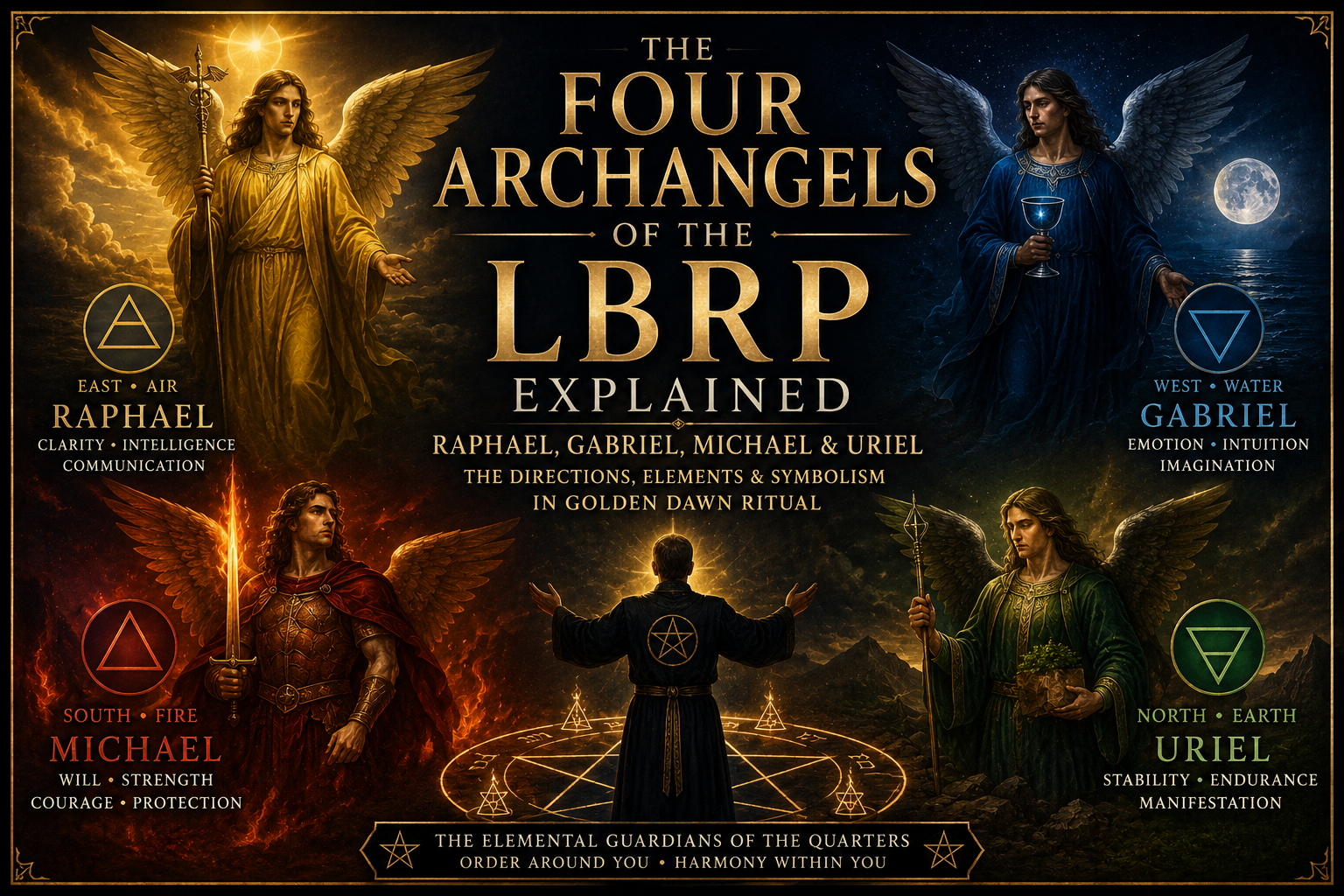
This article explores the four archangels invoked during the Lesser Banishing Ritual of the Pentagram, examining Raphael, Gabriel, Michael, and Uriel as more than protective figures within the Golden Dawn tradition. Each archangel is considered in relation to a cardinal direction, classical element, symbolic quality, and psychological faculty, revealing how Air, Fire, Water, and Earth are organized into a balanced ritual field around the practitioner. Through their placement in the East, South, West, and North, the archangels become a living map of clarity, will, emotion, imagination, stability, and embodiment. This article provides a deeper framework for understanding how the archangelic invocation supports elemental equilibrium, spiritual orientation, and inner integration within the LBRP and the broader system of Hermetic Qabalah and ceremonial magic.
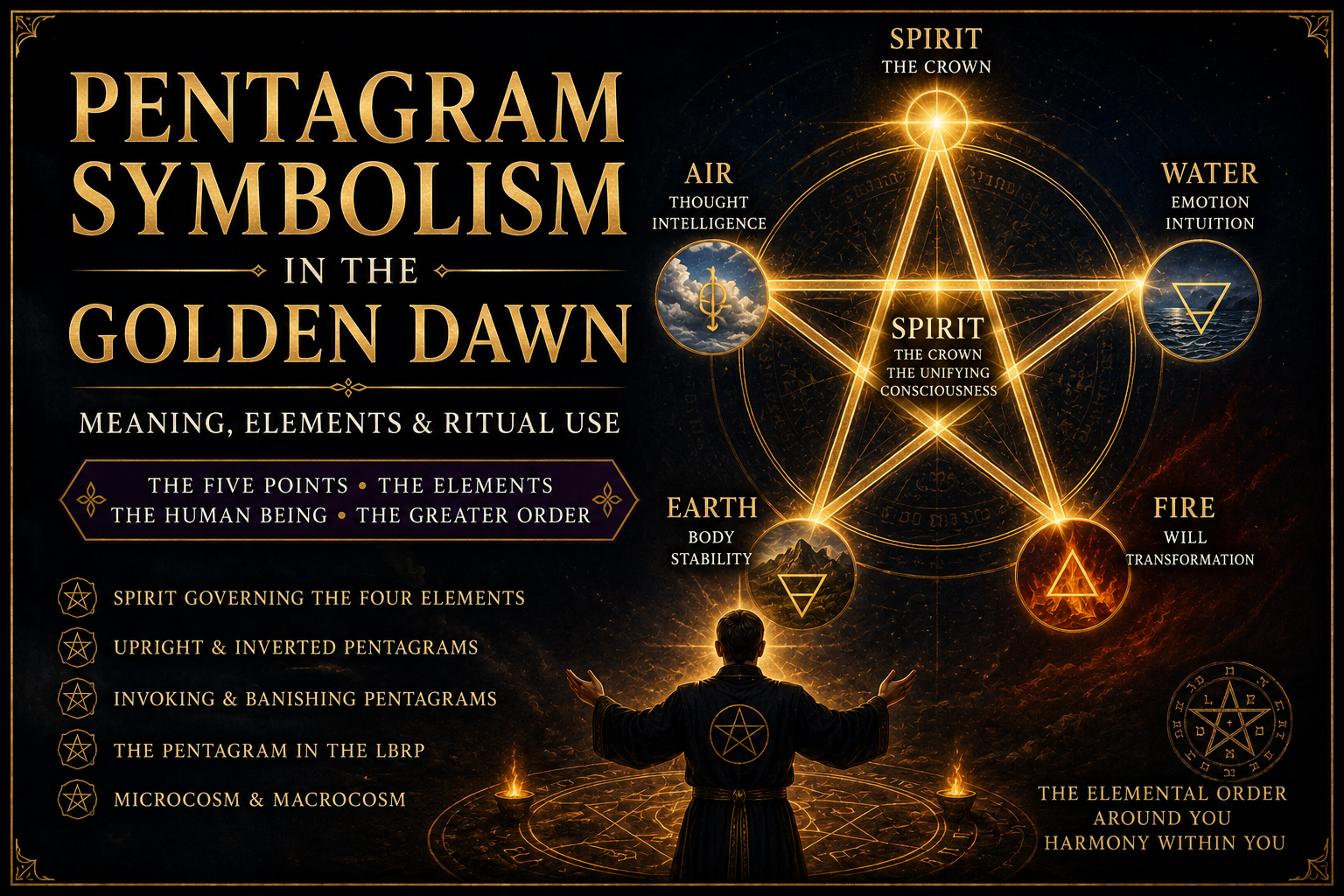
This article explores the pentagram as one of the central symbols of the Golden Dawn tradition, examining its relationship to Spirit, Air, Fire, Water, and Earth. Rather than treating the pentagram as a generic emblem of magic or protection, the article presents it as a complete model of elemental balance, human consciousness, and ritual order. It also explains the difference between invoking and banishing pentagrams, the role of the symbol in the LBRP, its relationship to the hexagram, and its use as an image of the human being as a microcosm. Through these correspondences, the pentagram is revealed as a practical and initiatory symbol of integration, spiritual authority, and the conscious harmonization of the elemental forces.
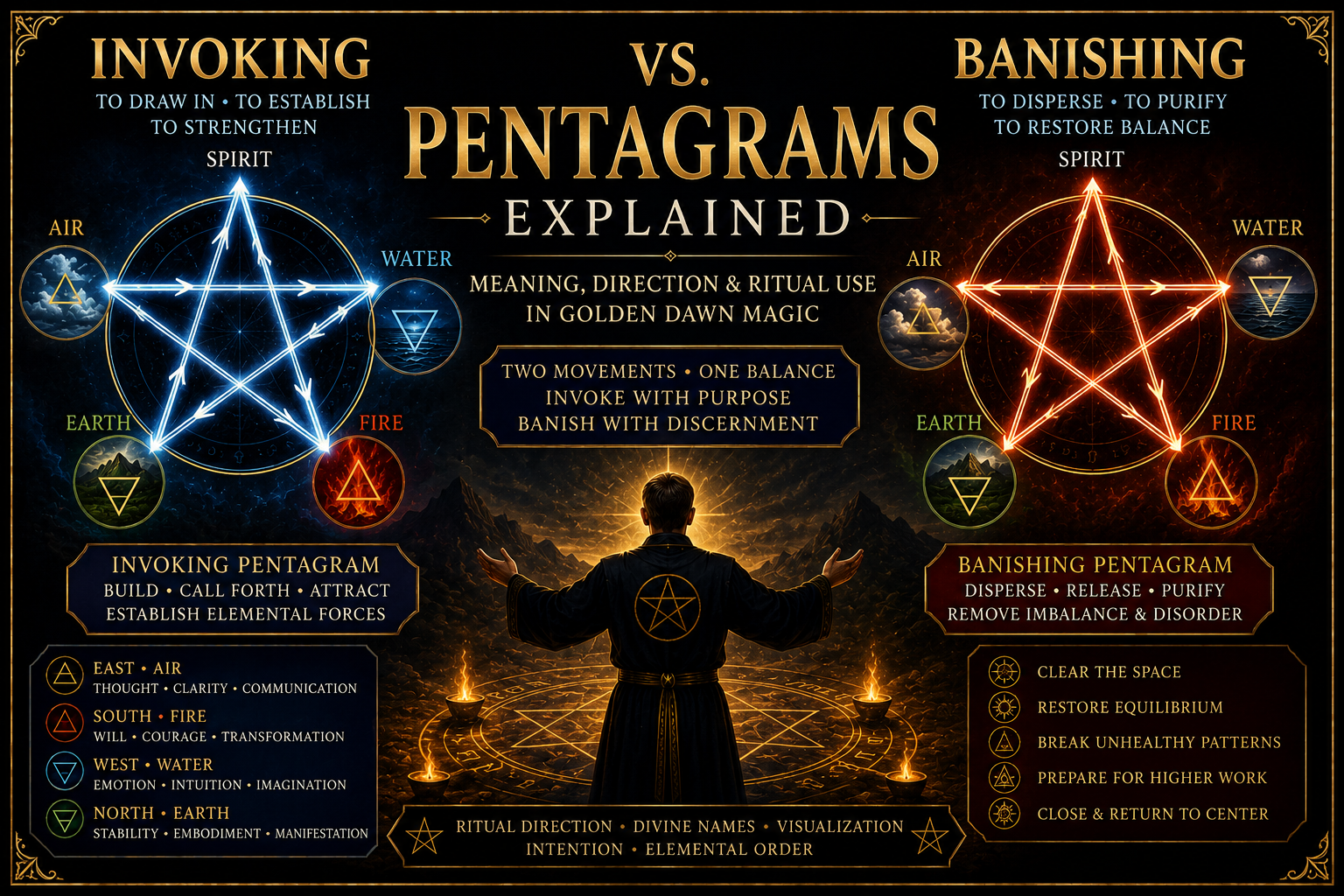
This article explores the difference between invoking and banishing pentagrams within the Golden Dawn tradition, explaining how the direction of tracing, elemental attribution, divine names, visualization, and intention determine the purpose of each ritual form. Invoking pentagrams are examined as methods for establishing and strengthening elemental forces, while banishing pentagrams are presented as practices of purification, release, and restoration of equilibrium. The article also explains why the LBRP uses the banishing Earth pentagram, how invoking and banishing form a complete cycle of ceremonial work, and how these operations reflect the psychological processes of building, clearing, integration, and return to center. Through this framework, pentagram ritual is revealed as a disciplined method of elemental balance rather than a simple act of summoning or removal.
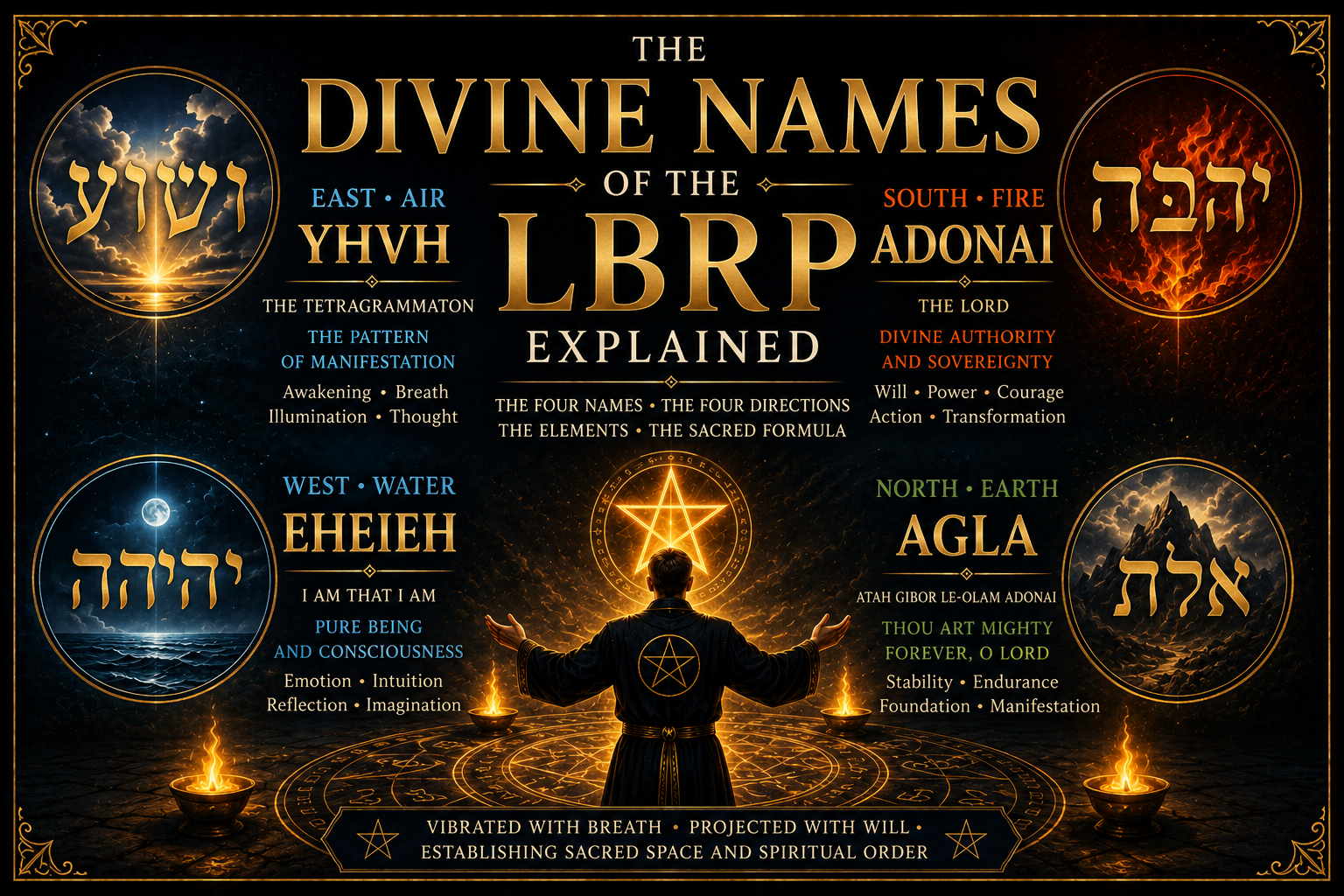
This article explores the four divine names used in the Lesser Banishing Ritual of the Pentagram, examining YHVH, Adonai, Eheieh, and AGLA in relation to the cardinal directions, classical elements, and symbolic structure of Golden Dawn ritual. Rather than treating these names as mysterious words spoken by rote, the article explains how each functions as a sacred formula of manifestation, authority, being, and enduring strength. It also examines why the names are vibrated rather than merely spoken, how breath, visualization, and intention activate the pentagrams, and how the four quarters become a complete map of both the ritual space and the practitioner’s inner faculties. Through this framework, the divine names are revealed as the spiritual voice of the LBRP, establishing sacred order, elemental balance, and conscious alignment within the Golden Dawn system.
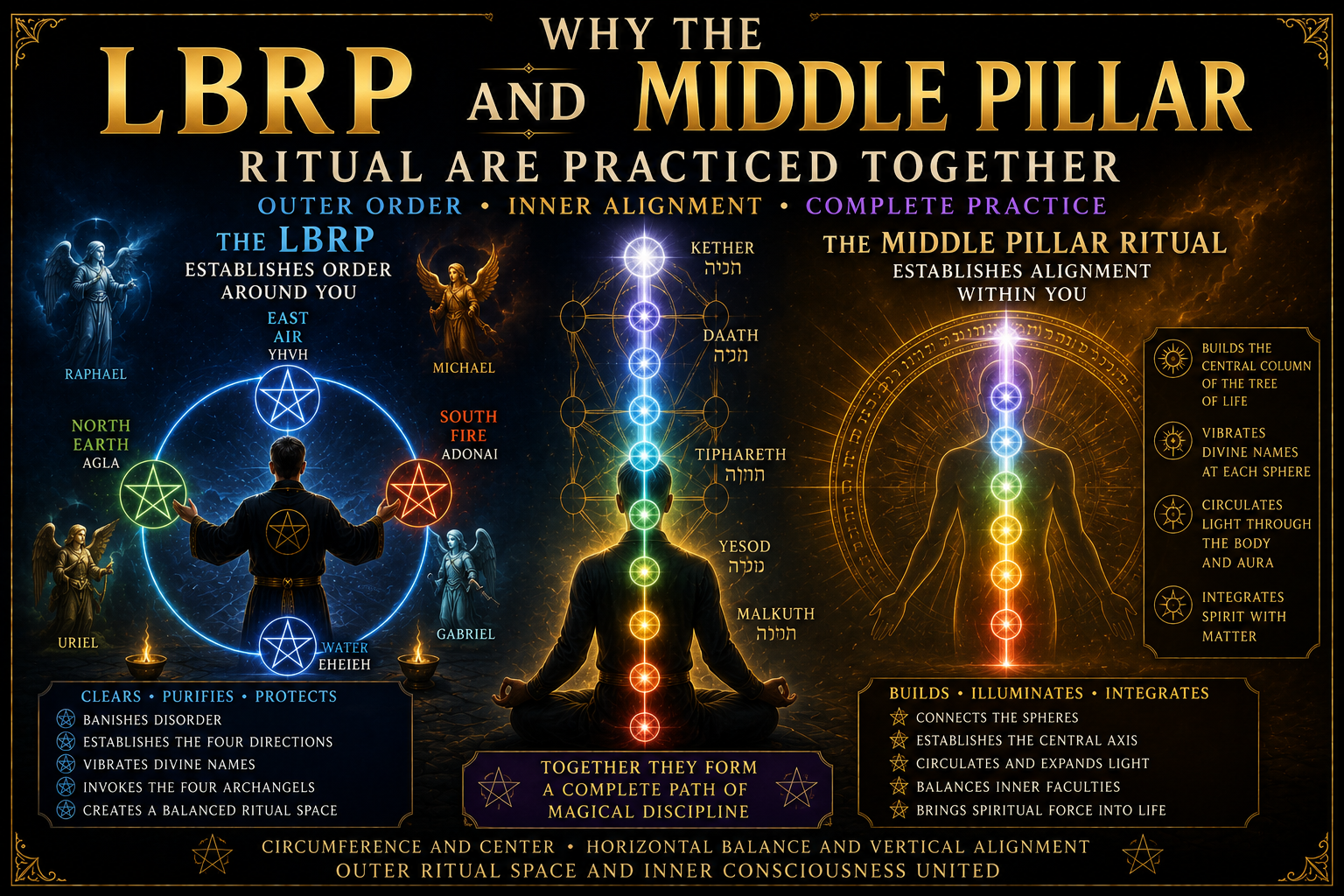
This article explores why the Lesser Banishing Ritual of the Pentagram and the Middle Pillar Ritual are often practiced together within the Golden Dawn tradition. The LBRP is presented as a method of establishing elemental balance, directional awareness, and an ordered ritual field around the practitioner, while the Middle Pillar develops the central axis of consciousness through the spheres of the Tree of Life, divine-name vibration, and the circulation of light. Together, the two rituals unite outer purification with inner alignment, circumference with center, and horizontal balance with vertical integration. Through this complementary structure, they form a complete foundational practice for developing concentration, symbolic awareness, spiritual embodiment, and preparation for deeper work in Hermetic Qabalah and ceremonial magic.
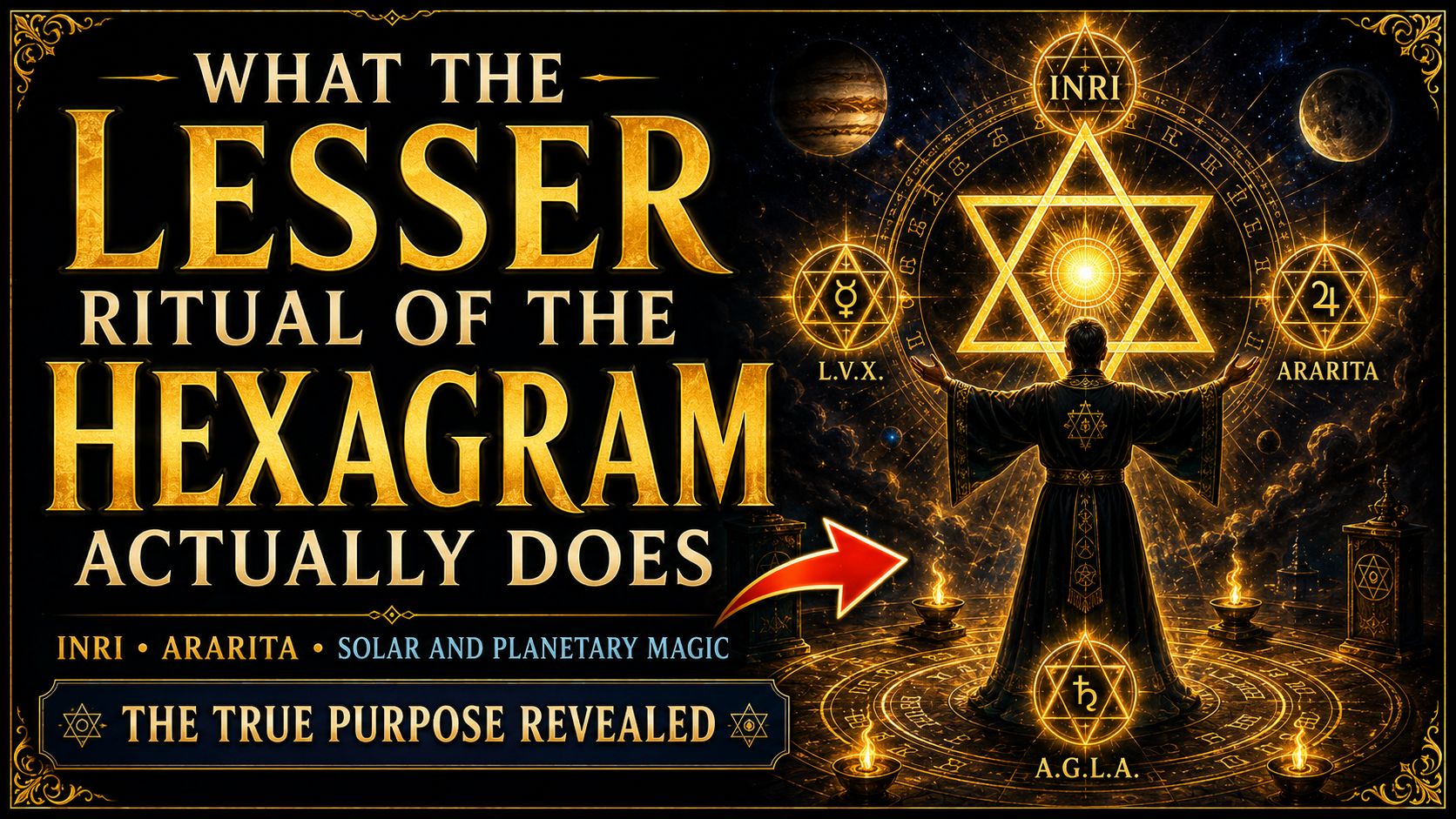
This article explores the Lesser Ritual of the Hexagram as a central macrocosmic practice within the Golden Dawn tradition, examining its relationship to planetary forces, solar consciousness, and the greater cosmic order. Through the formulas of INRI, IAO, L.V.X., and ARARITA, the ritual presents a symbolic cycle of creation, dissolution, transformation, and resurrection. The article also explains the four elemental hexagrams, the distinction between invoking and banishing forms, and the relationship between the hexagram, the classical planets, and the Tree of Life. Through this structure, the Lesser Ritual of the Hexagram is revealed as more than a method of planetary purification, serving instead as a complete ritual of transformation, unity, and alignment between the human microcosm and the universal macrocosm.
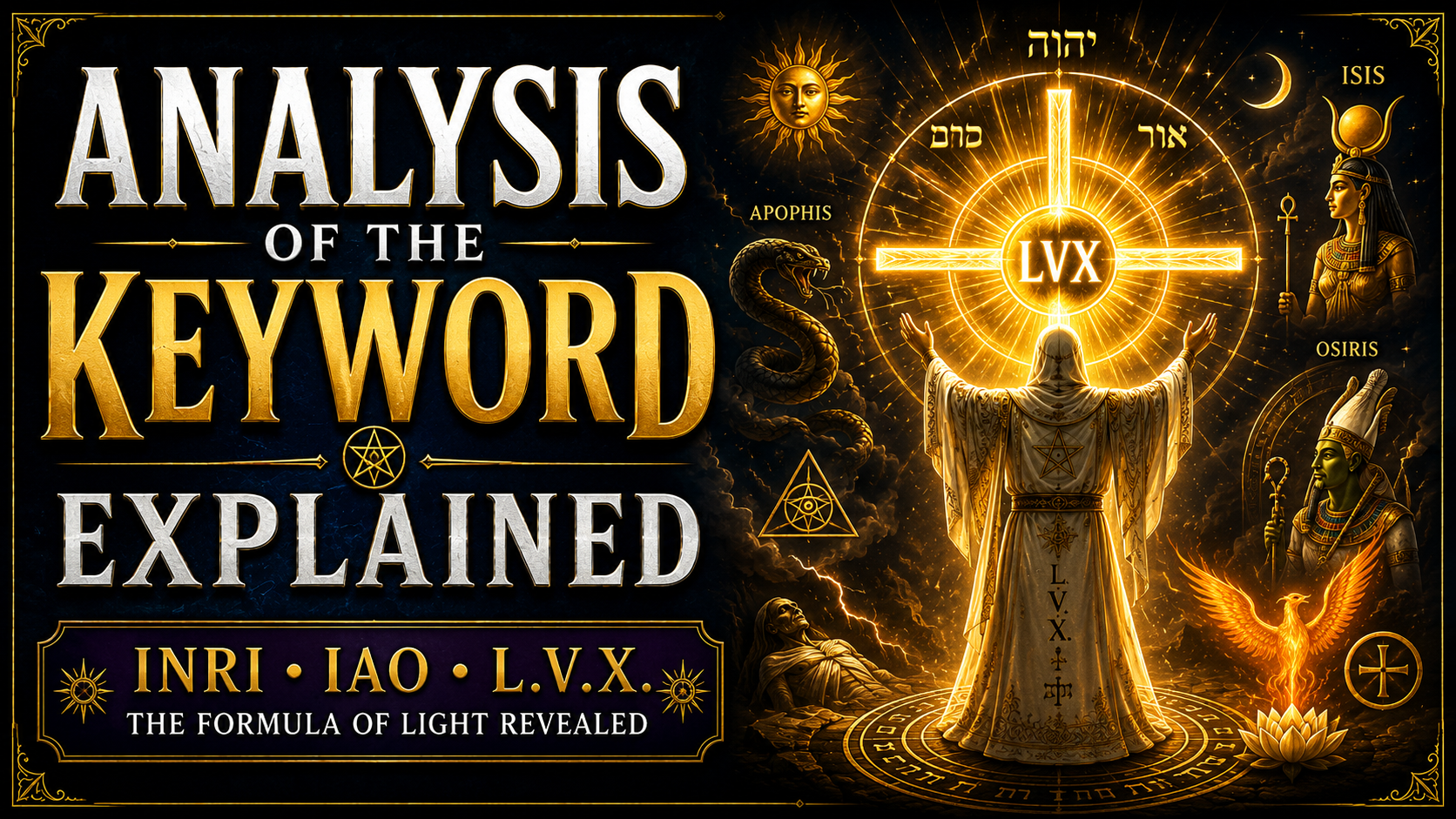
This article explores the Golden Dawn Analysis of the Keyword as a complete formula of spiritual transformation expressed through INRI, IAO, and L.V.X. The ritual is examined through its Christian, Egyptian, Hebrew, astrological, and Qabalistic correspondences, including the figures of Isis, Apophis, and Osiris and the signs of death, mourning, dissolution, and resurrection. Rather than treating the formula as a collection of mysterious words and gestures, the article reveals how each stage describes the transformation of identity, the collapse of limiting forms, and the emergence of a renewed solar center. Through this structure, the Analysis of the Keyword becomes a practical and initiatory map of sacrifice, reintegration, illumination, and the embodiment of divine light within the Golden Dawn tradition.
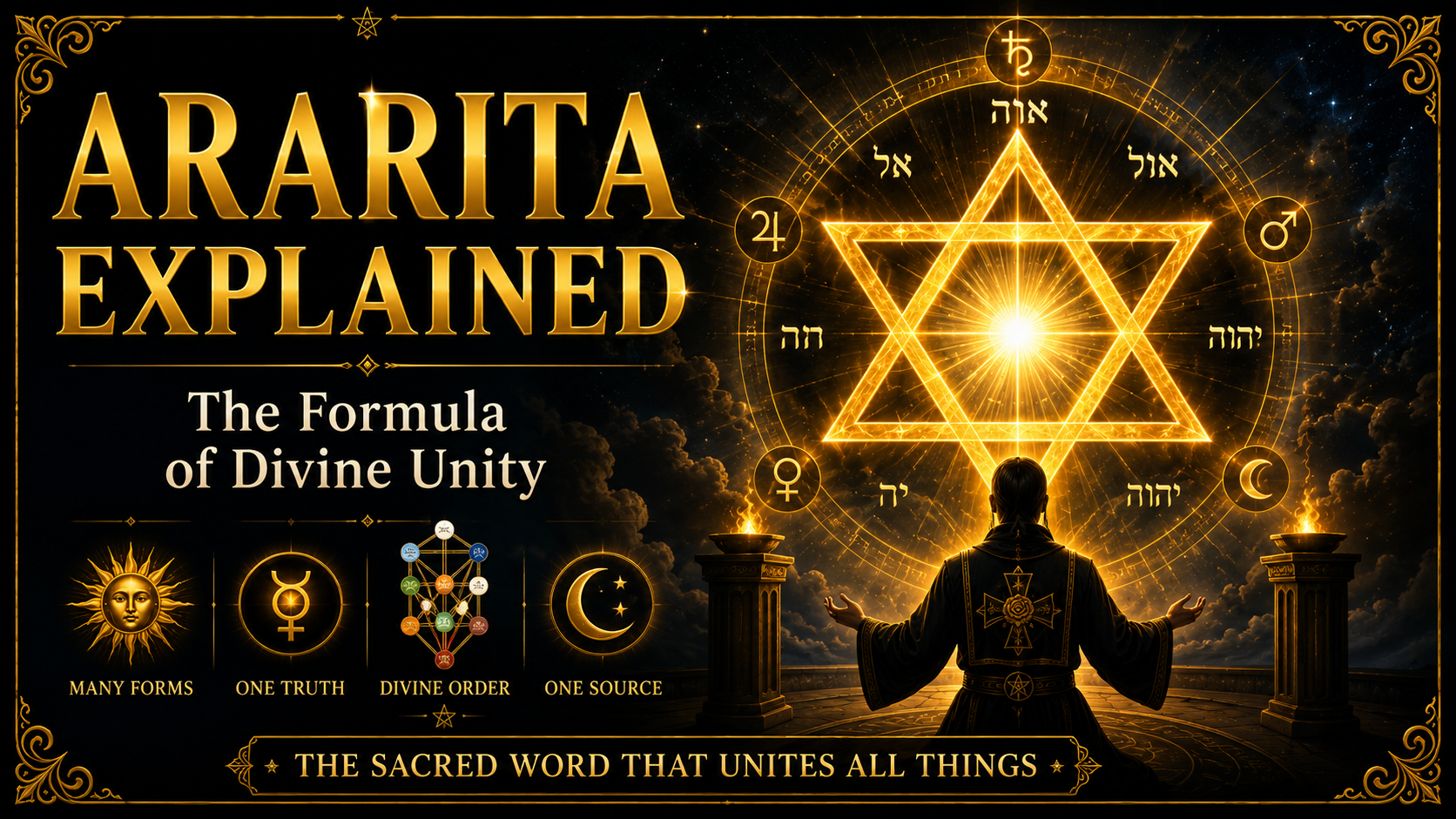
This article explores ARARITA as one of the central formulas of unity within the Golden Dawn tradition, explaining its meaning as a Qabalistic notarikon and its role in the Lesser Ritual of the Hexagram. Rather than treating ARARITA as a mysterious word spoken by rote, the article reveals how it expresses the principle that all forms, forces, planets, Sephiroth, and permutations arise from one divine source. It also examines the formula’s relationship to the hexagram, the seven classical planets, the Tree of Life, Tiphareth, planetary magic, and the integration of the human microcosm with the greater macrocosm. Through this framework, ARARITA becomes a practical and contemplative key to understanding unity within diversity and the central purpose of the Great Work.
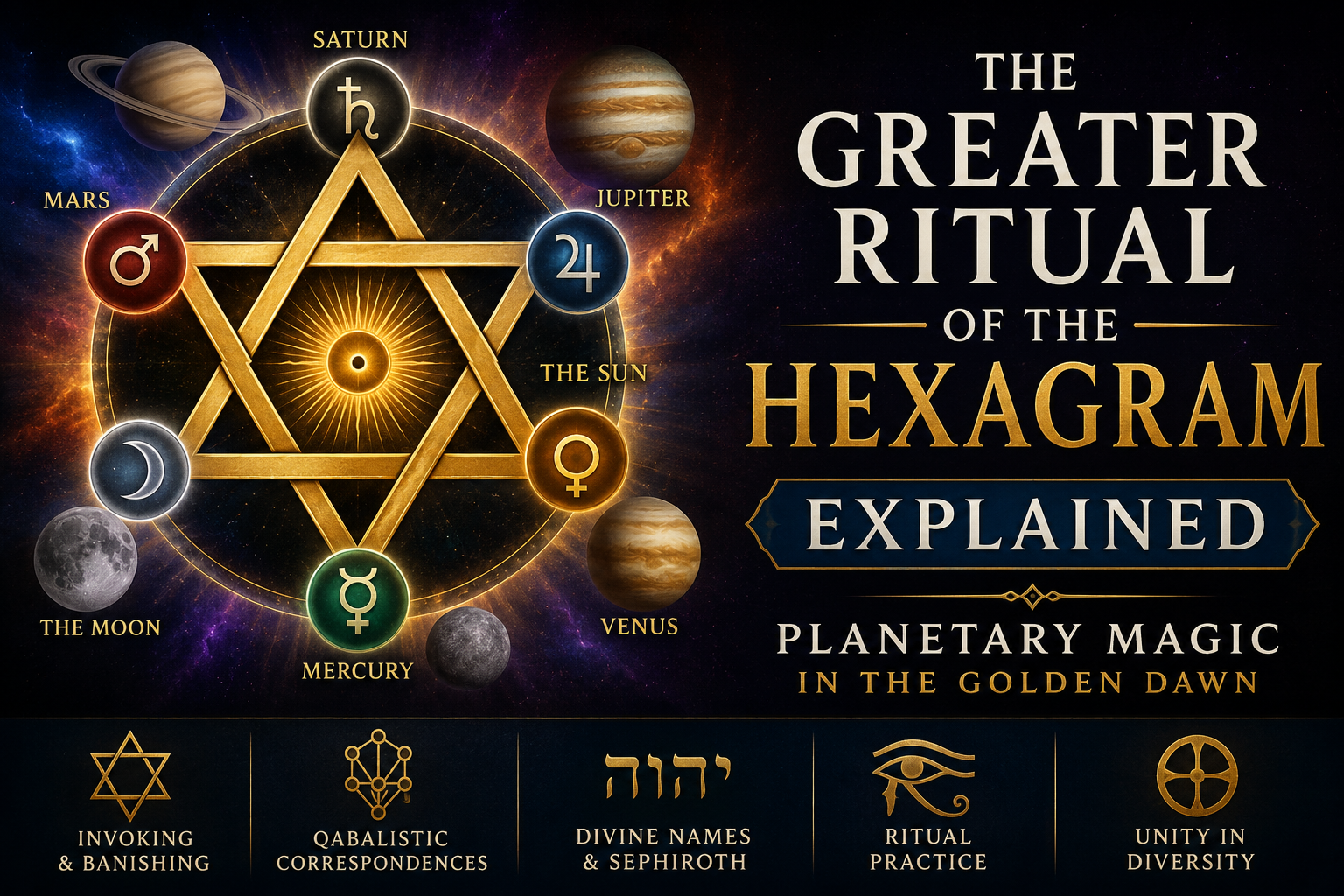
This article explores the Greater Ritual of the Hexagram as a focused method of planetary work within the Golden Dawn tradition. Unlike the Lesser Ritual of the Hexagram, which establishes a general macrocosmic field, the Greater Ritual directs the practitioner toward a specific planetary force through its corresponding hexagram, astrological symbol, divine name, Sephirah, and ritual intention. The article examines the seven classical planets, their psychological and Qabalistic meanings, the difference between invoking and banishing operations, and the importance of maintaining a solar center throughout planetary work. Through this framework, the Greater Ritual of the Hexagram is revealed as a disciplined system for studying, balancing, and integrating planetary forces within the larger structure of Hermetic Qabalah and the Great Work.
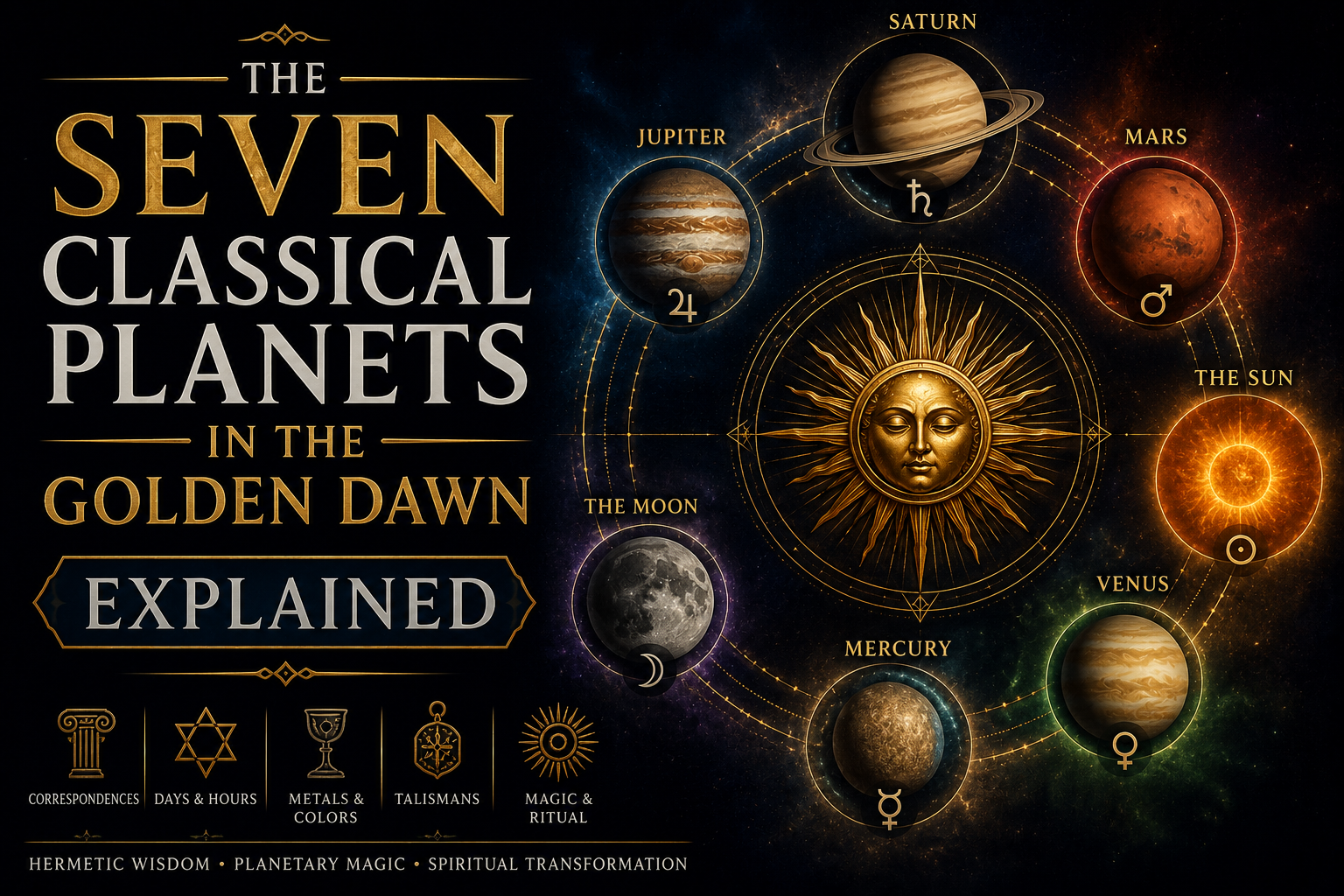
This article explores the seven classical planets as a complete symbolic system within the Golden Dawn tradition, examining Saturn, Jupiter, Mars, the Sun, Venus, Mercury, and the Moon in relation to their spiritual, psychological, astrological, and ritual meanings. Each planet is presented as a distinct force governing qualities such as structure, expansion, courage, identity, attraction, communication, imagination, and reflection. The article also explains their correspondences with the Sephiroth, planetary days and hours, metals, colors, divine names, archangels, hexagram rituals, and talismanic magic. Through this framework, the seven planets are revealed as an integrated map of consciousness and cosmic order, providing the practitioner with a practical system for recognizing, balancing, and directing the planetary forces within both ritual and everyday life.
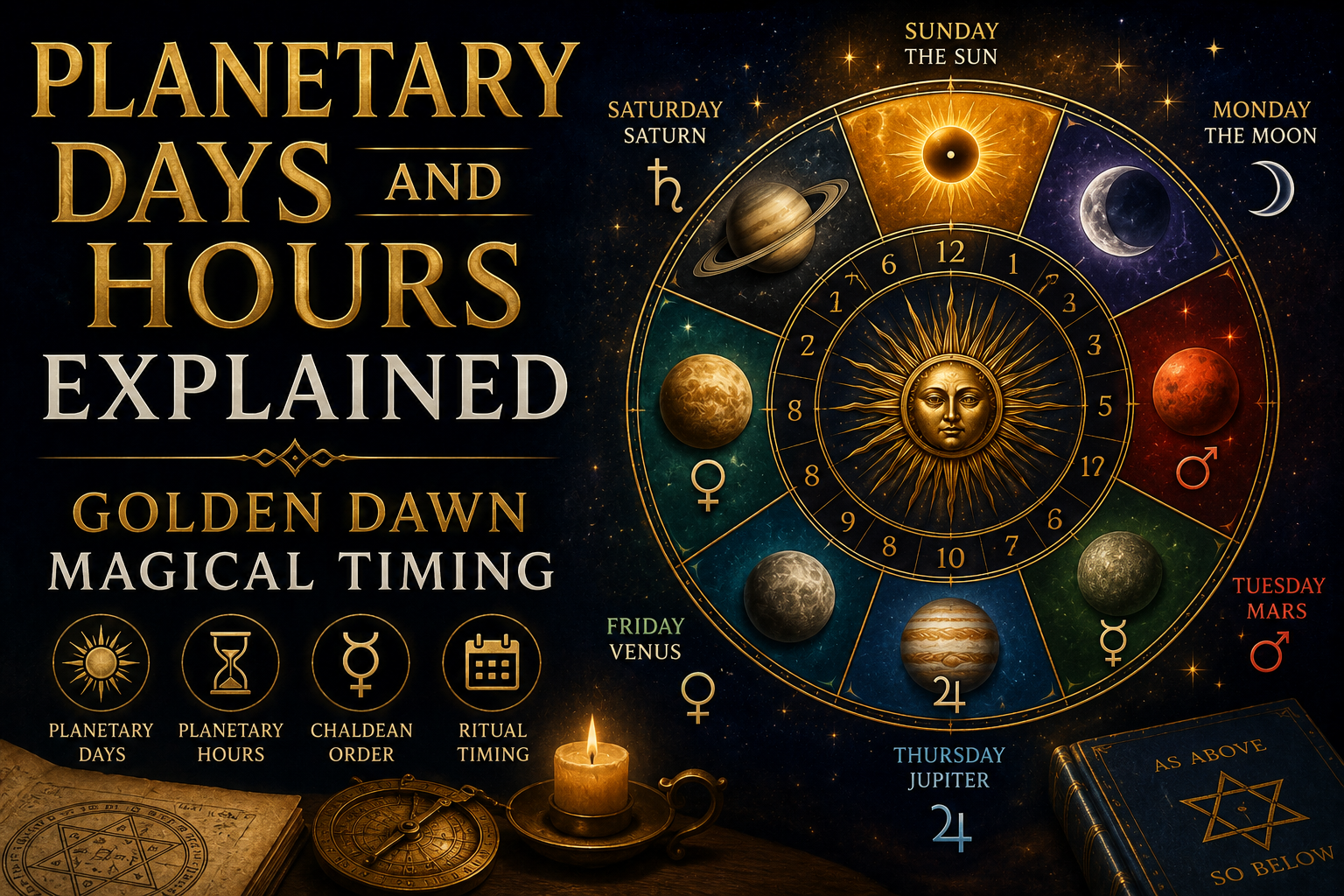
This article explores planetary days and hours as a traditional system of magical timing used within Golden Dawn ritual, astrology, and talismanic practice. It explains how each day of the week is governed by one of the seven classical planets, how the twenty-four planetary hours are calculated from local sunrise and sunset, and how the Chaldean order determines their repeating sequence. The article also examines the ritual purposes associated with Saturn, Jupiter, Mars, the Sun, Venus, Mercury, and the Moon, including their use in meditation, hexagram rituals, talisman consecration, and practical daily work. Through this framework, planetary timing is revealed as a method of bringing intention, symbolism, and action into greater harmony, allowing time itself to become an active component of ceremonial practice and the Great Work.
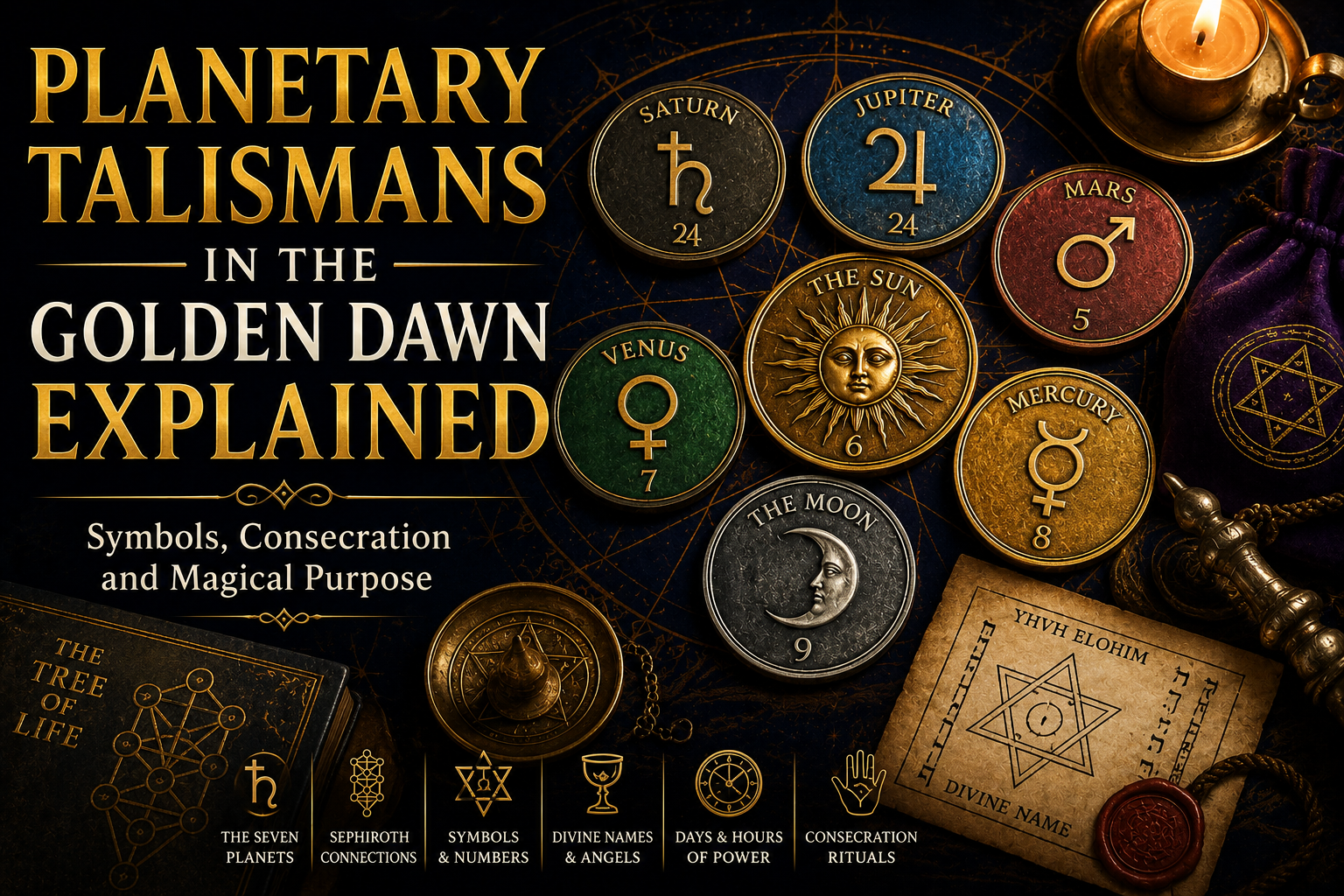
This article explores planetary talismans as carefully constructed ritual instruments within the Golden Dawn tradition, rather than simple charms or decorative occult objects. It explains how a talisman combines the symbolism of a classical planet with its corresponding Sephirah, divine name, archangel, number, color, metal, magic square, astrological glyph, and planetary day and hour. The article also examines how talismans are designed, purified, consecrated, charged, used, and eventually decommissioned, while emphasizing the importance of ethical intention, symbolic accuracy, and practical action. Through this framework, the planetary talisman is revealed as a material vessel for a complete ceremonial formula, allowing the practitioner to bring planetary consciousness into sustained relationship with ritual practice, personal development, and the Great Work.
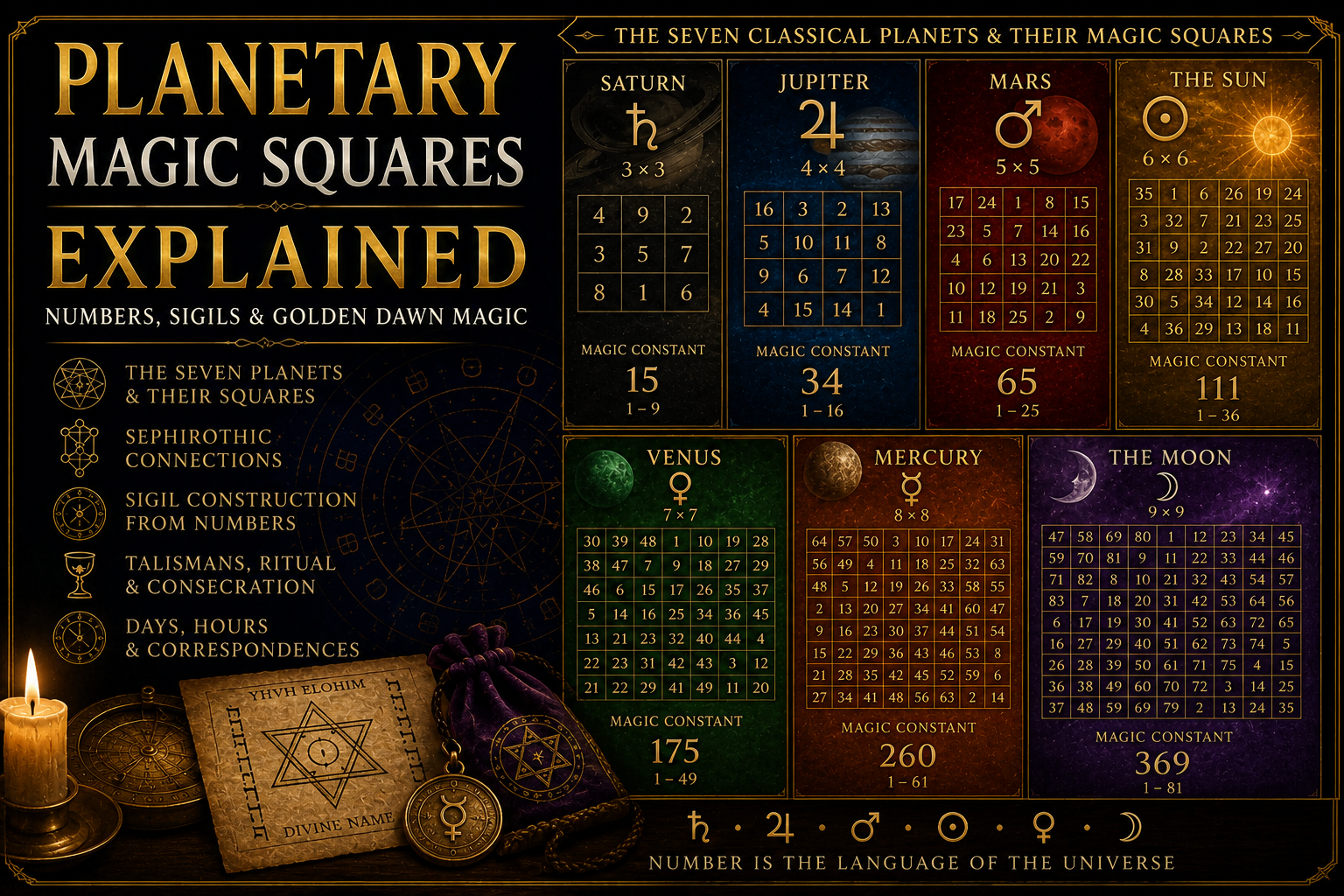
This article explores planetary magic squares as mathematical and symbolic diagrams used within Golden Dawn talismanic magic. It explains how the seven classical planets correspond to squares ranging from Saturn’s 3 by 3 grid to the Moon’s 9 by 9 grid, with each square linked to a Sephirah, planetary number, magic constant, and total numerical value. The article also examines how planetary sigils are derived from these grids, how divine names, astrological symbols, planetary timing, and ritual consecration are incorporated into talismanic design, and why numerical accuracy is essential. Through this framework, planetary magic squares are revealed as more than numerical puzzles, serving instead as structured images of planetary order, unity within diversity, and the transformation of language, number, geometry, and intention into a material form for ceremonial practice.