Section 9: Why Most Modern “Golden Dawn” Is Broken — And What a True Revival Requires
The Hermetic Order of the Golden Dawn did not decline because its system stopped working. It declined because its structure was abandoned. What survives today under the name “Golden Dawn” is often a fragmented shadow of a once-coherent initiatory technology; pieces without architecture, symbolism without discipline, and aesthetics without doctrine.
This section addresses what went wrong historically, why so much modern Golden Dawn material feels hollow or contradictory, and what must be restored for the tradition to function again as a living initiatory system rather than a museum of symbols.
What Went Wrong Historically
The collapse of coherence within the Golden Dawn tradition did not occur overnight, nor was it caused by a single event. It resulted from progressive fragmentation, driven by human limitations rather than doctrinal flaws.
Fragmentation of the System
After the original Order fractured, teachings were scattered across publications, personal interpretations, splinter groups, and incomplete reconstructions. Material that was once transmitted progressively and contextually became available all at once, without the structural safeguards that made it functional.
When a system designed for initiation is reduced to a library, its internal logic dissolves.
Rituals were separated from grades. Symbols were divorced from correspondences. Advanced material circulated without preparation. Over time, the Golden Dawn ceased to operate as a system and became a collection of parts.
The Rise of Personality-Centered Transmission
As structure weakened, authority shifted from doctrine to individual personalities. Charismatic figures, authors, and teachers began to replace the system itself as the source of legitimacy.
This produced:
- Conflicting interpretations presented as definitive
- Personal innovation elevated above structural coherence
- Loyalty to teachers rather than adherence to doctrine
When personality replaces structure, transmission becomes unstable. Each new voice reframes the system according to preference, eroding consistency across generations.
The Golden Dawn was never meant to be personality-driven. It was meant to be system-driven.
Aesthetic Over Doctrine
Perhaps the most visible distortion is the elevation of aesthetic magic over functional magic. Tools became decorative. Rituals became theatrical. Symbols became branding.
When appearance replaces understanding:
- Tools lose their training function
- Ritual loses its transformative power
- Practice becomes performance
This shift appeals to modern sensibilities, but it cannot produce initiation. A system optimized for appearance cannot sustain discipline, integration, or responsibility.
Magic becomes something one looks like rather than something one becomes capable of.
Why Modern Reconstructions Fail
Many modern reconstructions attempt to revive the Golden Dawn by reproducing its outer forms; ritual scripts, symbols, diagrams; while ignoring its inner architecture.
These reconstructions often fail because they:
- Remove Qabalistic structure to “simplify” the system
- Encourage premature access to advanced material
- Replace graded progression with open consumption
- Treat personal experience as verification
The result is a system that looks complete but behaves erratically. Practitioners report intense experiences without lasting integration, fascination without stability, and insight without coherence.
This is not a failure of the Golden Dawn.
It is a failure to respect the Golden Dawn.
What a True Revival Requires
A genuine revival of the Golden Dawn cannot be cosmetic. It must restore the functional conditions that made the system effective in the first place.
Structure Must Be Central
Structure is not authoritarian; it is protective. A revived Golden Dawn must restore:
- Graded progression
- Contextual transmission
- Clear correspondences
- Defined limits
Without structure, power disperses chaotically. With structure, transformation becomes sustainable.
Tools Must Be Restored as Instruments, Not Props
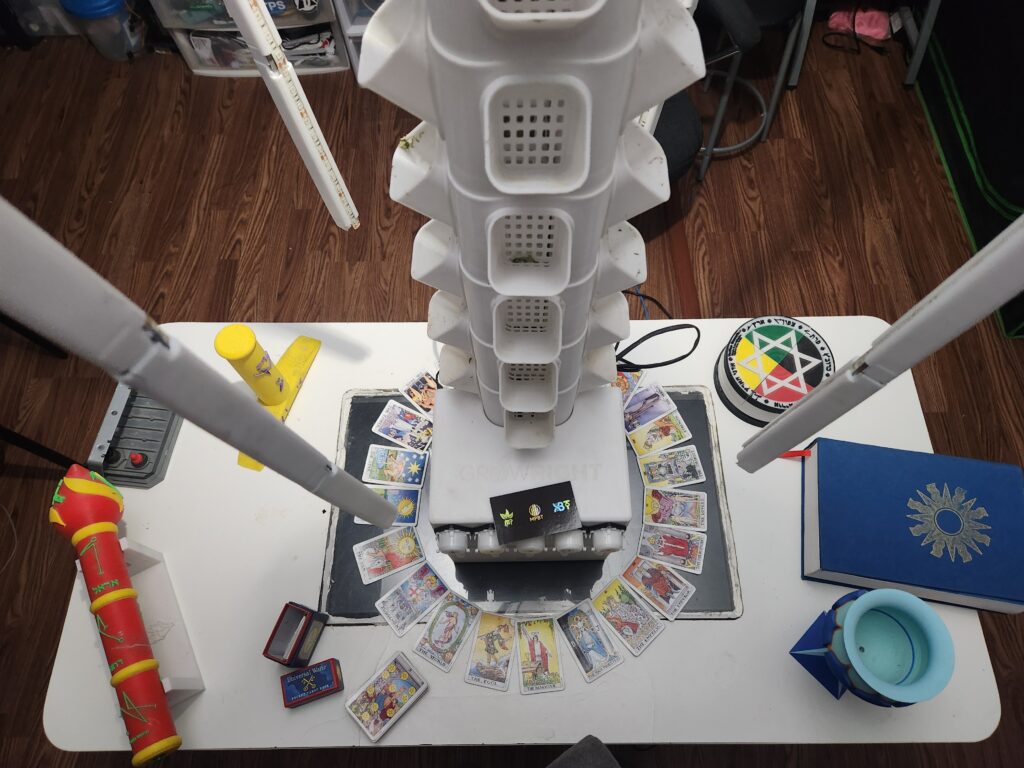
Authentic tools are not optional accessories. They are interfaces that train consciousness. A true revival must insist on tools that:
- Encode doctrine correctly
- Enforce discipline through use
- Resist egoic improvisation
Without functional tools, doctrine remains abstract.
Discipline Must Replace Casual Consumption
The Golden Dawn was never designed for passive reading or casual experimentation. It requires practice, repetition, and restraint.
A revival demands:
- Commitment over curiosity
- Integration over experience-chasing
- Responsibility over novelty
Discipline is not restriction. It is what makes depth possible.
Coherence Must Be Non-Negotiable
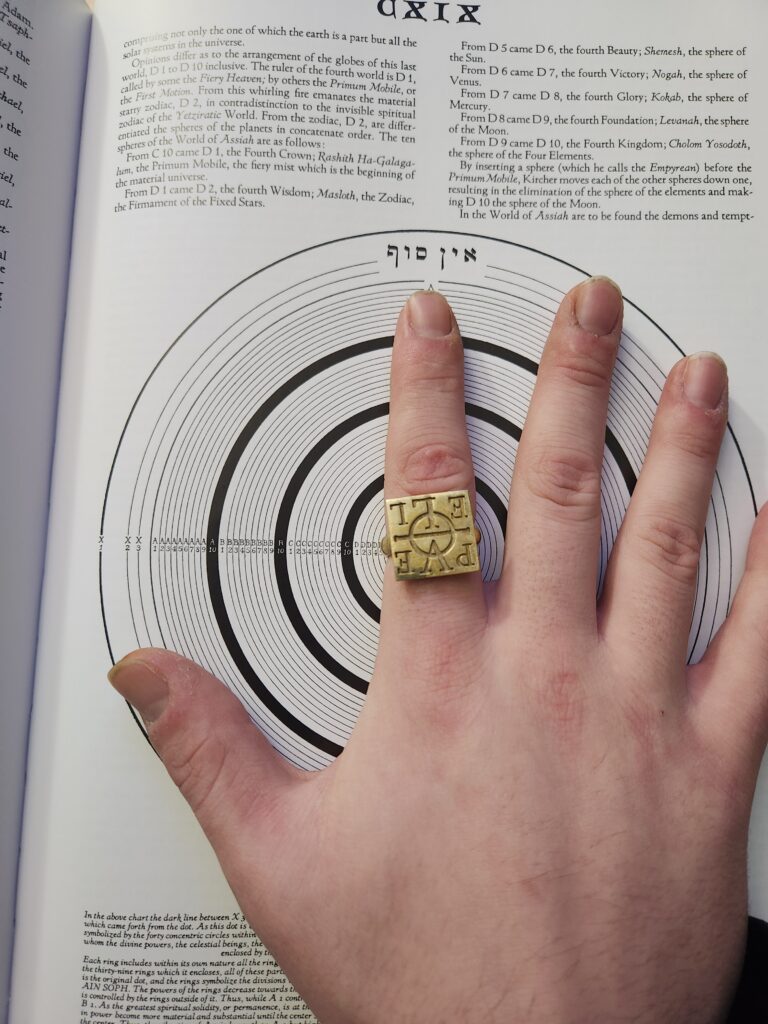
The Golden Dawn is powerful because it is internally consistent. Every part maps to every other part through the Tree of Life, the elements, the planets, and the zodiac.
A true revival refuses contradiction disguised as creativity. It insists that:
- Symbols mean something precise
- Practices serve defined purposes
- Advancement reflects real integration
Coherence is what allows a system to transmit across generations without collapse.
Why Revival Matters Now
Western esotericism is at risk; not because interest is declining, but because structure is eroding. Information without architecture produces confusion. Access without preparation produces instability.
The Golden Dawn matters now because it offers:
- A complete initiatory framework
- A method for integrating power ethically
- A system capable of evolving without fragmenting
Revival is not about nostalgia. It is about restoring a working technology of consciousness.
The Responsibility of Transmission
Anyone who claims to work within the Golden Dawn tradition inherits a responsibility: not to dilute, sensationalize, or personalize the system beyond recognition.
Transmission requires humility before structure.
The question is no longer, “Can the Golden Dawn be revived?”
The question is, “Who is willing to revive it correctly?”
Where This Leads Next
Once the failures are diagnosed, only one question remains:
Why must this work continue; and who is it for?
- Section 10: Why This Work Must Continue
This is the call to action.
FAQ 1: Why do so many modern Golden Dawn groups feel incomplete or ineffective?
Many modern Golden Dawn groups feel ineffective because they preserve outer symbolism while abandoning internal structure. When graded progression, Qabalistic context, and elemental discipline are removed or diluted, the system loses its capacity to produce genuine initiation and instead becomes fragmented or performative.
FAQ 2: What went wrong historically with the Golden Dawn tradition?
Historically, the Golden Dawn fragmented after internal disputes and the loss of centralized transmission. Teachings that were once progressive and contextual became published, rearranged, and practiced without the structural safeguards that originally made the system functional and coherent.
FAQ 3: Is modern Golden Dawn practice mostly aesthetic rather than functional?
In many cases, yes. Modern interpretations often emphasize appearance, symbolism, or ritual drama over disciplined integration. When aesthetic replaces doctrine, tools lose their initiatory purpose and ritual becomes performance rather than transformation.
FAQ 4: Why does removing structure cause occult systems to fail?
Structure ensures that forces are encountered progressively and responsibly. When structure is removed, practitioners engage power without preparation, leading to imbalance, confusion, or collapse. The Golden Dawn was designed to prevent this by enforcing coherence through doctrine, tools, and graded initiation.
FAQ 5: Can the Golden Dawn be revived authentically today?
Yes. Authentic revival is possible when the system’s original functional principles are restored rather than reinterpreted cosmetically. This requires re-centering the Tree of Life, enforcing elemental balance, respecting initiatory grades, and treating tools as instruments rather than props.
FAQ 6: What is the difference between reconstruction and true revival?
Reconstruction focuses on reproducing outer forms such as rituals or symbols. True revival restores how the system operates internally; its structure, progression, and disciplinary safeguards; allowing the Golden Dawn to function again as a living initiatory framework rather than a historical reenactment.