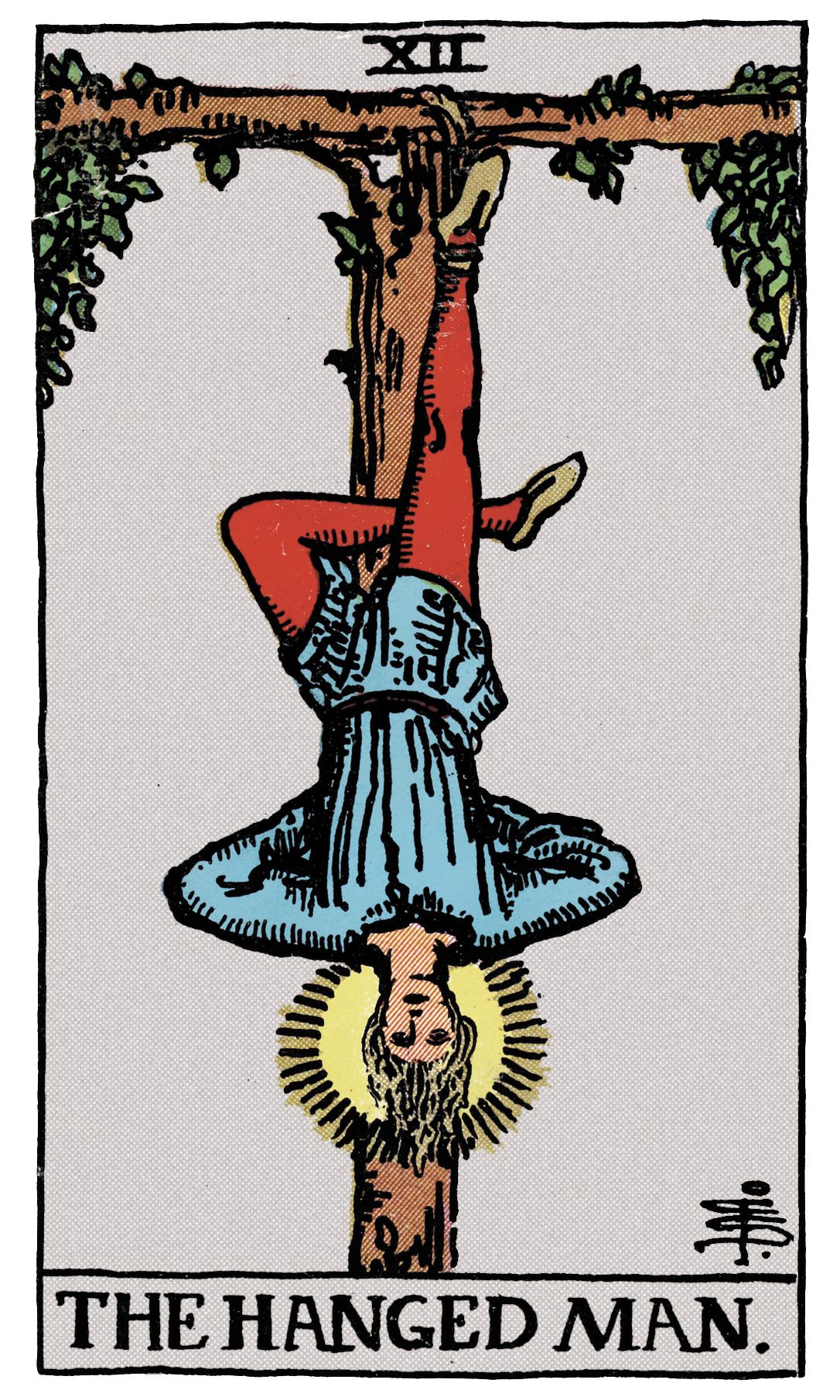
The Hanged Man
The Hanged Man represents suspension, sacrifice, and the transformation that comes through surrender. In the Rider–Waite deck, a figure hangs inverted from a living tree, serene rather than distressed, with a halo of light around his head. Where Justice demands alignment through truth, the Hanged Man reveals that some truths can only be reached by letting go of control.
Numbered XII, the Hanged Man signifies voluntary reversal. This is not punishment or defeat, but a conscious pause; an intentional offering of certainty in exchange for insight. Progress halts not because the path is blocked, but because perspective must change.
Esoteric Meaning
In practical interpretation, The Hanged Man signifies:
- Surrender and acceptance
- Sacrifice for greater understanding
- Reversal of perspective
- Suspension and patience
- Inner transformation
At a deeper level, the Hanged Man represents initiation through inversion. The ego must relinquish its habitual orientation so that deeper truths may emerge. This card teaches that resistance delays insight, while surrender accelerates it.
In its shadow aspect, the Hanged Man can indicate stagnation, martyrdom, or refusal to act when action is required. When surrender becomes avoidance, transformation stalls.
The Hanged Man on the Tree of Life
In the Golden Dawn system, The Hanged Man corresponds to the Hebrew letter Mem (מ) and is assigned to Path 23 on the Tree of Life.
- Path: 23
- Connects: Geburah (Severity) → Hod (Splendor)
- Hebrew Letter: Mem
- Element: Water
Mem means “water,” symbolizing depth, dissolution, and unconscious processes. This path channels the force of Geburah into the intellectual sphere of Hod, dissolving rigid patterns so that new understanding may form. The Hanged Man immerses consciousness into inner depths where transformation occurs silently.
As Water, this card governs emotional surrender, intuition, and the dissolution of boundaries necessary for rebirth.
Symbolism in the Rider–Waite Deck
Each symbol reinforces voluntary sacrifice:
- The Inverted Figure: Reversal of perspective
- The Halo: Illumination gained through surrender
- The Living Tree: Growth through sacrifice
- The Bent Leg: The alchemical symbol of the cross
- The Bound Foot: Self-imposed limitation
The Hanged Man does not suffer unwillingly; he offers himself to transformation.
Role in the Great Work
Within the Great Work, the Hanged Man represents the stage of ego dissolution. After balance and judgment, the practitioner must release attachment to outcomes, identity, and certainty. This is the surrender that allows deeper alignment to emerge.
The Hanged Man teaches that not all progress is forward motion. Sometimes the Work advances through stillness, inversion, and trust in unseen processes.
Where Justice corrects through truth, the Hanged Man transforms through surrender.
FAQ 1: What does The Hanged Man represent in the Golden Dawn tradition?
In the Golden Dawn, The Hanged Man represents voluntary surrender and the reversal of perspective. It governs the conscious suspension of action so that deeper understanding may arise through sacrifice and inner realignment rather than force.
FAQ 2: Is The Hanged Man a symbol of punishment or helplessness?
No. The Hanged Man is not punishment or victimhood. In Golden Dawn doctrine, the suspension is chosen freely. The initiate willingly relinquishes control to gain insight that cannot be accessed through effort or assertion.
FAQ 3: How is The Hanged Man associated with the Tree of Life?
The Hanged Man corresponds to the path connecting Geburah (Severity) to Hod (Splendor). This path represents the surrender of force into understanding, where power is refined through humility and conscious restraint.
FAQ 4: What planetary or elemental force is associated with The Hanged Man?
In the Golden Dawn system, The Hanged Man is associated with Water. This reflects dissolution, receptivity, and the ability to yield so that consciousness may be transformed through immersion rather than resistance.
FAQ 5: How does The Hanged Man function initiatorily?
Initiatorily, The Hanged Man follows Justice by suspending judgment and action. After truth and accountability are recognized, the initiate must release attachment to outcome, allowing insight to arise through stillness and surrender.
FAQ 6: What happens when The Hanged Man is misunderstood or resisted?
When misunderstood, The Hanged Man may feel like stagnation or loss. In Golden Dawn teaching, resistance to surrender prolongs suffering, while acceptance reveals hidden wisdom and prepares the initiate for profound transformation.
FAQ 7: Why is The Hanged Man essential to the Great Work?
The Hanged Man is essential because the Great Work requires the relinquishment of egoic control. Without surrender, transformation cannot occur. The Hanged Man ensures that progress continues through insight rather than force.